



A kid’s ponytail has a short life when it’s done badly. It starts neat at the kitchen counter, survives one excited head shake, and then one side slides loose while the other digs into the scalp. The ponytail styles for kids that actually earn their keep are the ones that stay soft at the hairline, hold through recess, and still look decent when a hoodie goes on and off three times.
That is why I like ponytails more than people expect. They’re fast, yes, but the real win is range: fine hair, thick hair, curls, coils, straight strands, short layers that keep escaping — there is a version for all of it. A high crown pony can look bright and tidy; a bubble pony can turn the same hair into something playful; a braided base can keep the style from sagging by lunch. The trick is knowing which version fits the day and the child.
And honestly, the best ponytail is not the fanciest one. It is the one your child will keep on without tugging at it every seven minutes. A good elastic, a clean part, and the right anchor point matter more than extra product or a drawer full of glitter clips. The styles below lean into that reality, because mornings are messy enough already.
Why These Ponytail Styles Earn Their Place
-
Fast Reset: Most of these looks can be redone in a few minutes after recess, which matters when hair has already been sat on, swung around, and half-undone by a backpack strap.
-
Comfort First: Several styles sit low at the neck or use softer hold points, which keeps the scalp from feeling pinched by lunch.
-
Hair-Type Friendly: The list covers straight, wavy, curly, coily, fine, thick, short, and layered hair instead of pretending one ponytail solves everything.
-
Dressy or Casual: A ribbon, a wrapped elastic, or one extra braid can take the same base style from class to a birthday party without starting from scratch.
-
No Heat Needed: Every style here can be done with a brush, elastics, and a few clips — no curling iron, no flat iron, no waiting around for tools to warm up.
1. High Cheer Pony
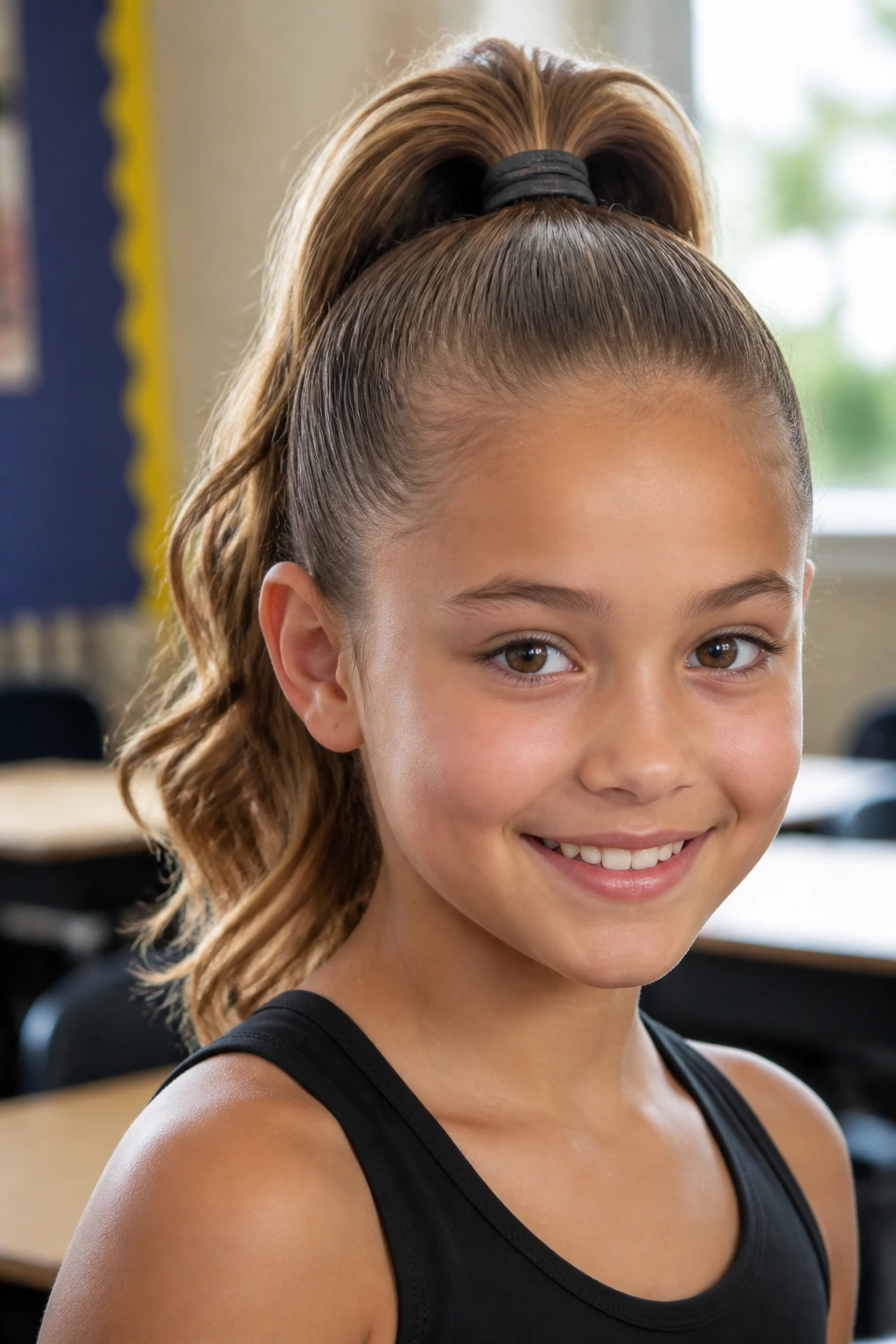
A high cheer pony sits right at the crown, which keeps hair off the face and gives the whole style a lifted, lively shape. Brush the top section first, then gather everything with one hand before the elastic goes in; that keeps the front smoother and cuts down on those little bumps that pop up near the temples. If the hair is fine, a mist of water or leave-in spray helps the grip.
Best for: school mornings, dance class, and kids who keep pushing their hair out of their eyes.
2. Low Nape Pony
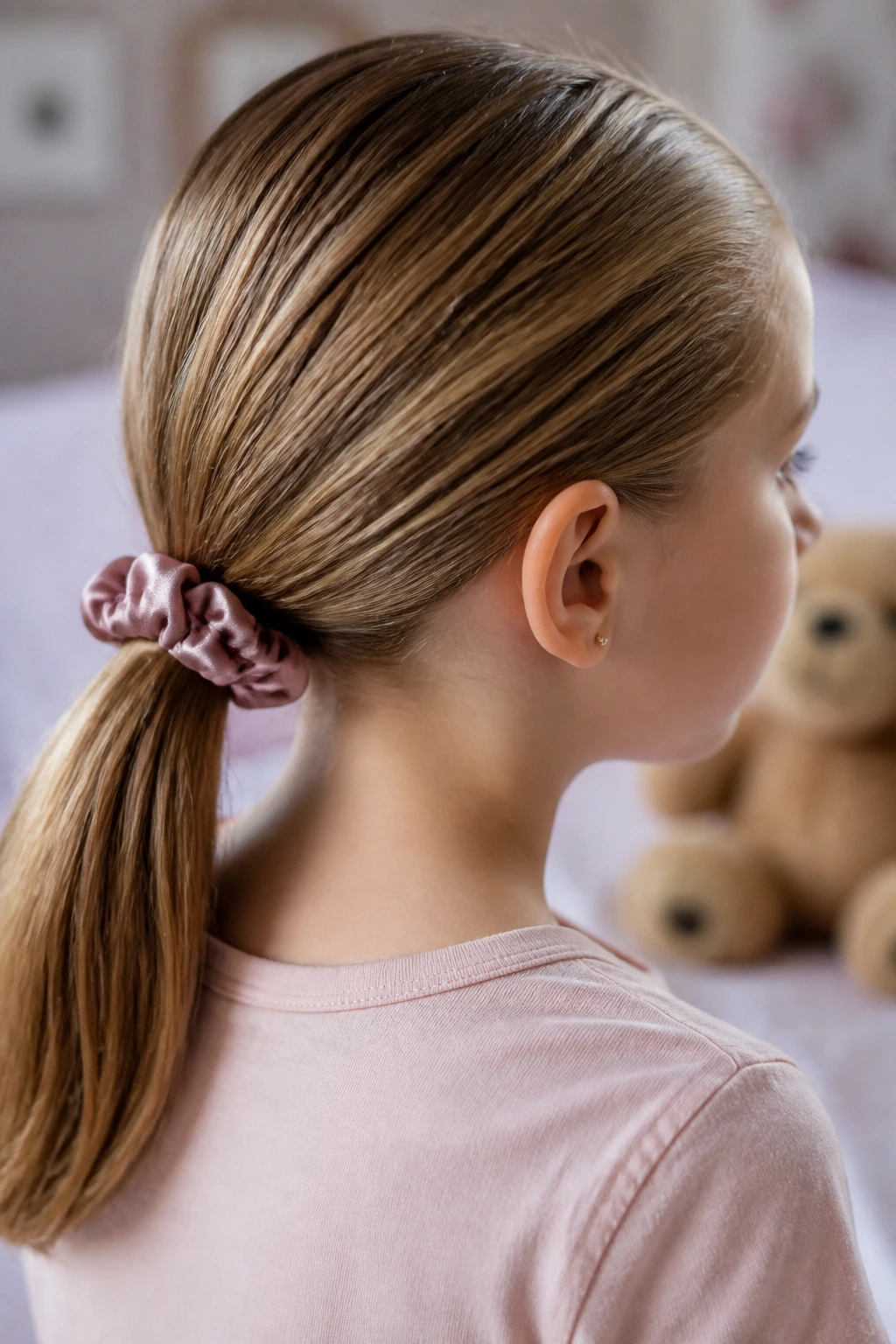
A low nape pony is the quiet one that behaves all day. It sits close to the neck, so there is less bounce, less pulling, and fewer complaints about a sore scalp by lunch. I reach for this when a child wants hair “done” but not tight.
Use a wide-tooth comb to smooth the back, then place the elastic just under the occipital bone — that little curve at the back of the head helps the pony stay put. A satin scrunchie makes the whole thing softer.
3. Bubble Pony
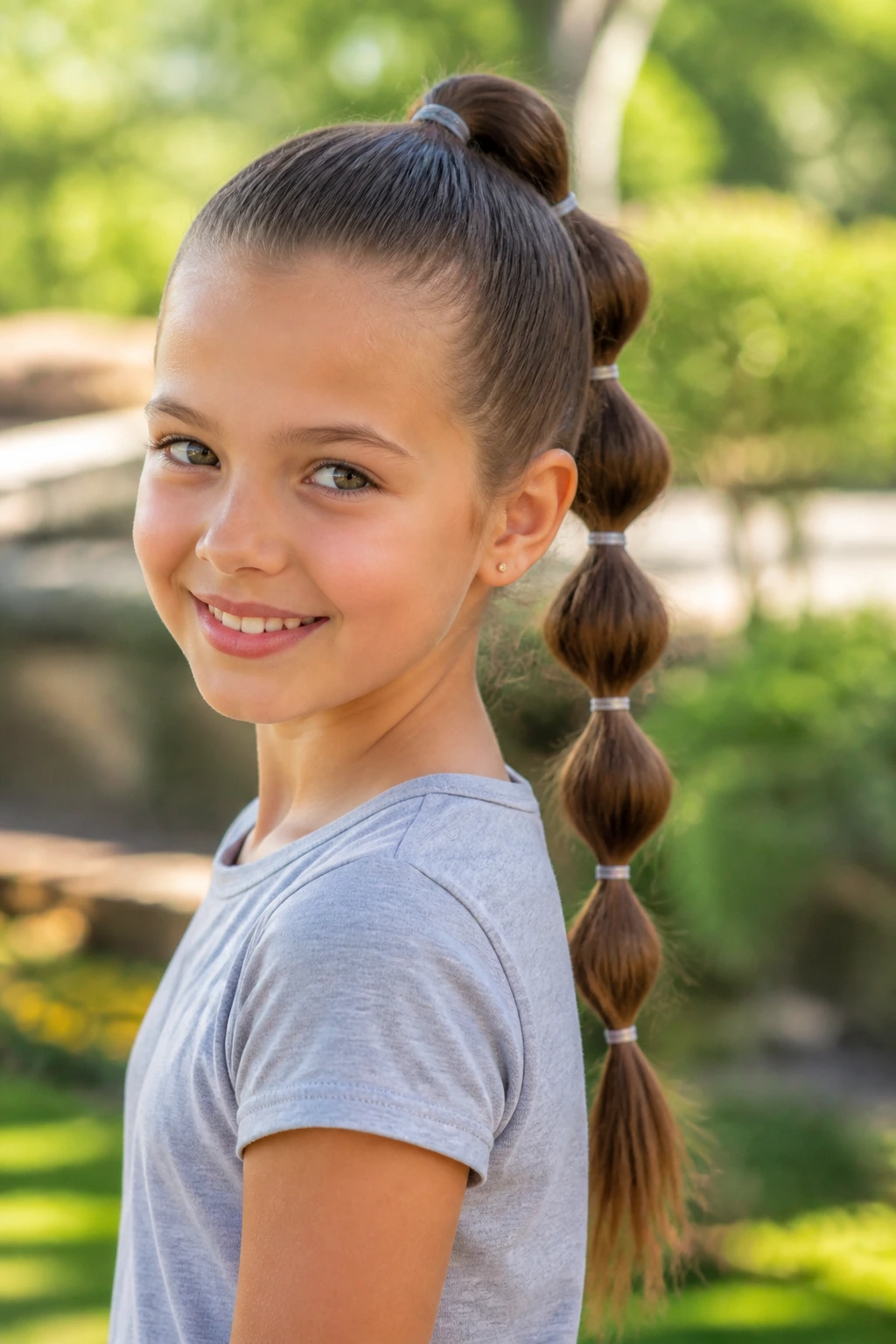
Why do bubble ponies look more finished than they really are? Because each elastic creates its own anchor point, and the hair puffing between them gives the style that playful, segmented shape. It’s one of the best ponytail styles for kids with long hair because it turns length into the feature instead of fighting it.
Quick setup
- Start with a regular ponytail.
- Add small elastics every 1 to 2 inches.
- Gently tug each section outward until it rounds into a bubble.
- Use clear elastics for a cleaner look or colored ones for a louder, more playful finish.
Small tip: keep the bubbles even only where you can see them; the back section can be less precise and nobody will notice.
4. Side-Swept Pony
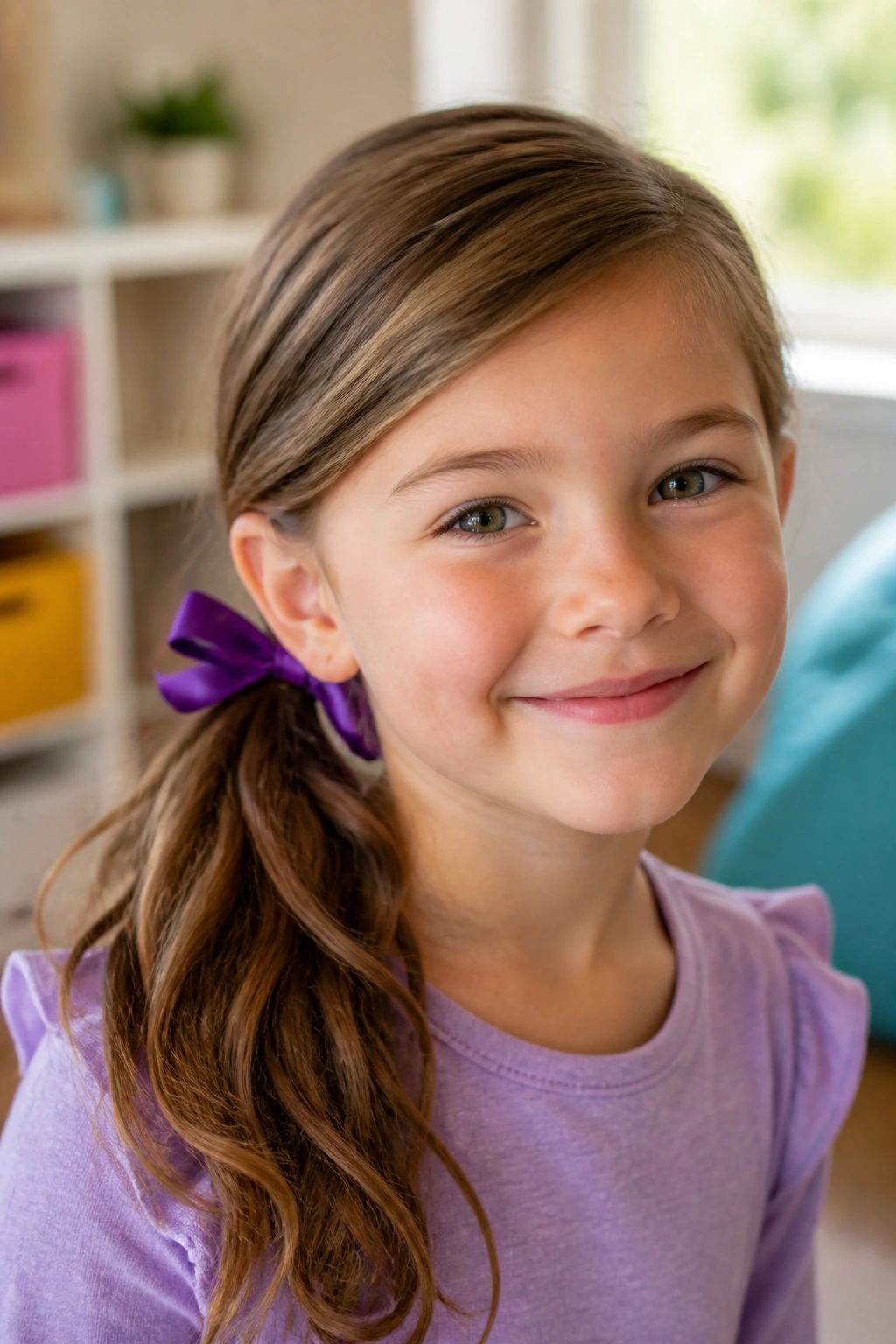
A side pony is what happens when you want the softness of a loose style but still need the hair off the face. It works nicely with growing-out bangs, because the front can sweep across the forehead instead of needing a perfect center part. The pony itself can sit just behind one ear or a little lower at the nape.
This one looks especially good with a ribbon or bow tied around the base. It feels a little retro, a little playful, and not remotely fussy.
5. Half-Up Pony
Half-up ponytails are the answer when a child wants hair down but not in the eyes. Only the top section goes up, which means the length still swings freely and the style stays lighter on the scalp than a full pony. It is a smart choice for layered cuts, because the lower hair hides the parts that would otherwise stick out.
The trick is to gather the top section from temple to temple, not too high and not too low. Too much hair and the pony droops; too little and it looks like an afterthought.
6. Braided-Base Pony
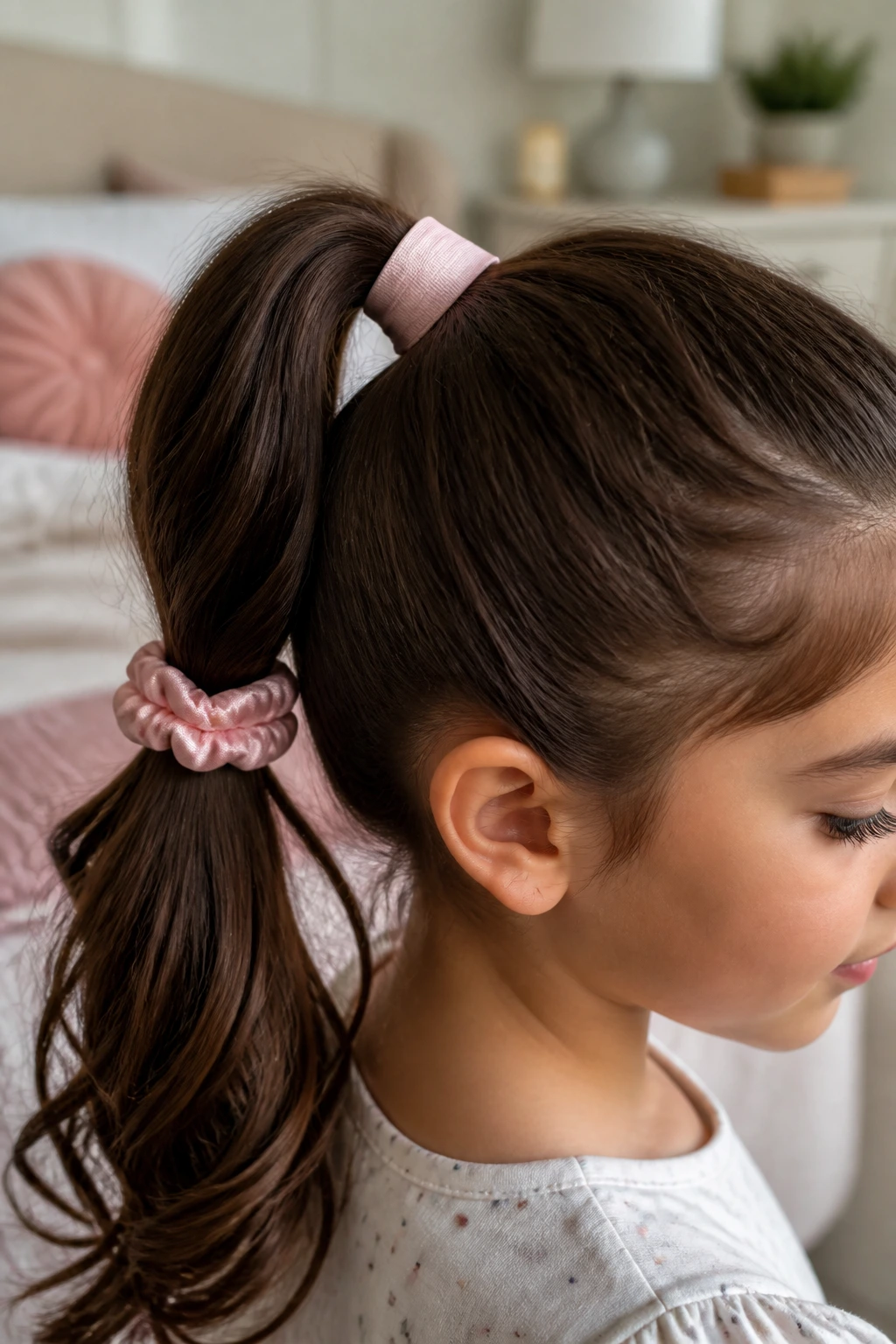
A braided-base pony adds a little structure right where a ponytail usually starts to loosen. A small French braid, Dutch braid, or even a simple three-strand braid from the front hairline back into the elastic gives the style more grip and keeps shorter pieces from flying free. That makes it a good pick for active kids.
It also looks neat without needing a lot of extra work. The braid does the visual heavy lifting, and the tail can stay plain. Practical. Which I appreciate.
7. Wrapped Elastic Pony
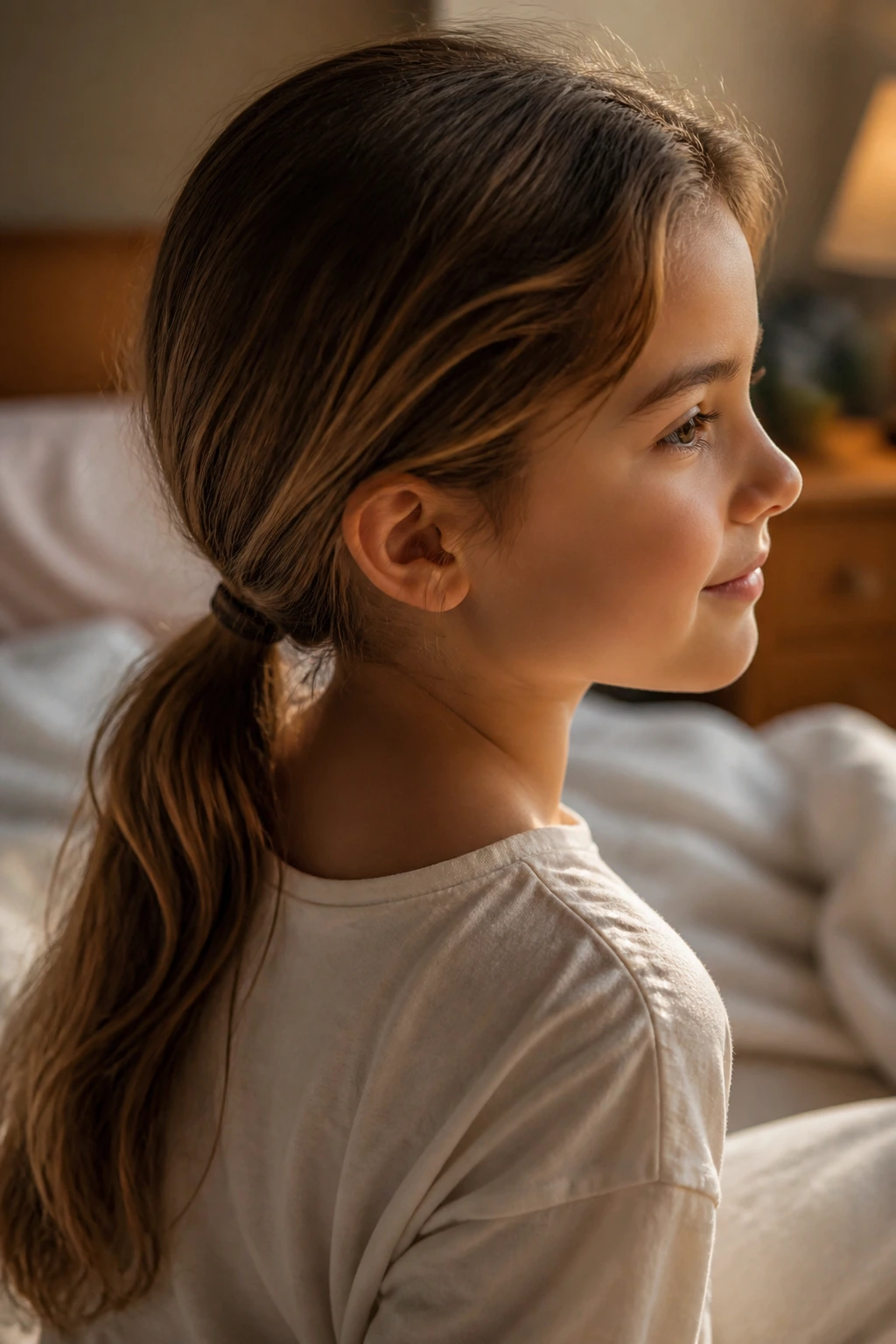
A wrapped pony hides the elastic with a strip of hair or a ribbon, and that tiny detail changes the whole mood. The base looks cleaner, the finish looks more polished, and you don’t get that obvious “I tied this in a hurry” line at the back. It is one of my favorites for photo day.
To do it, take a small strand from the underside of the pony, wind it around the elastic, and pin the end under the base with a bobby pin. If the hair is slippery, a light mist of hairspray on the strand helps it hold.
8. Double Ponytail
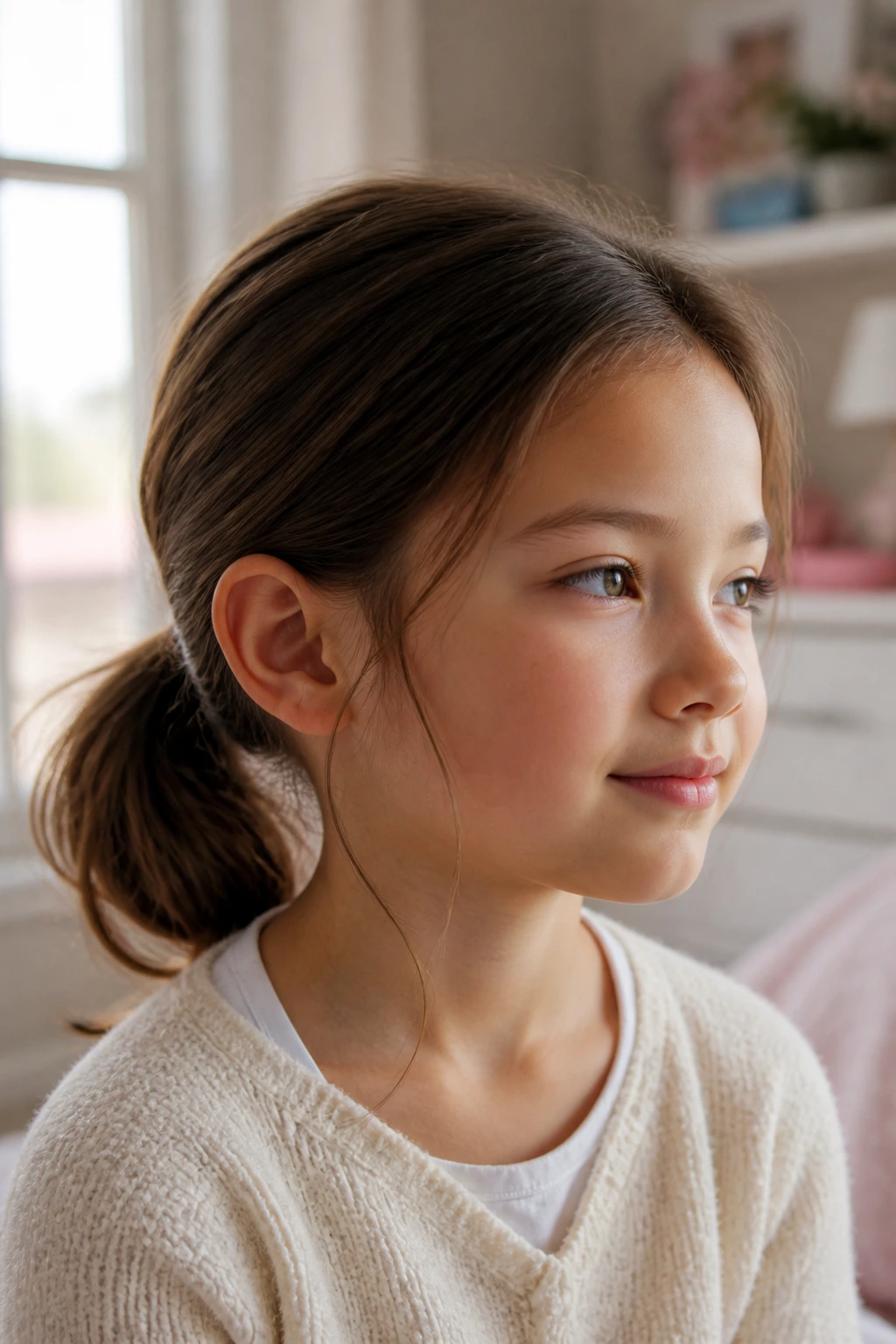
A double ponytail can mean two small ponies side by side or two stacked ones for extra fullness. Either way, it spreads the hair out so the style looks balanced instead of heavy in one spot. That makes it useful for thick hair that wants to pull itself down by noon.
For younger kids, two low puffs or two mid-height ponytails keep the style light and easy. For older kids with long hair, a stacked double pony gives more volume without teasing the roots.
9. Twisted-Front Pony
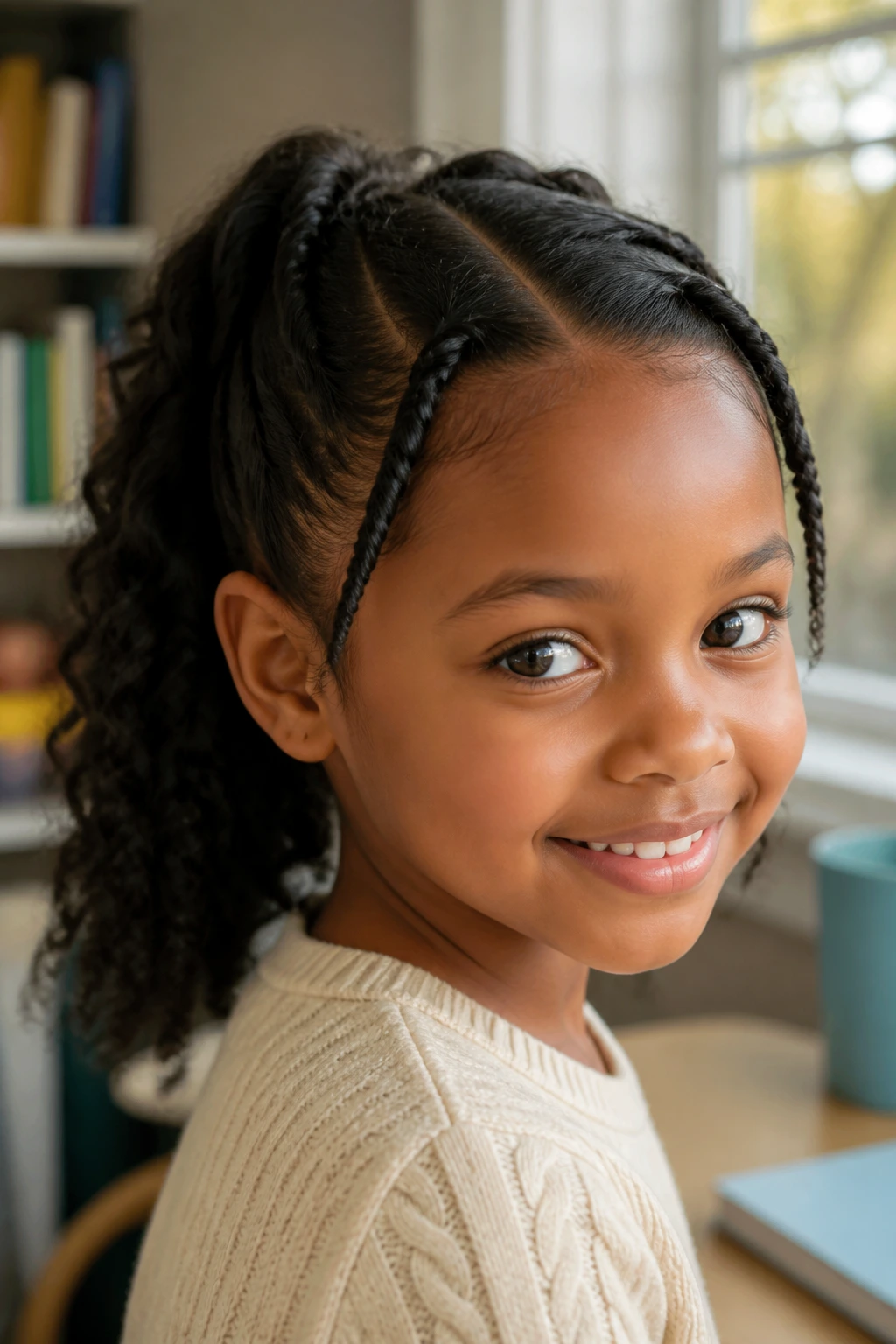
Twisted-front ponies are a neat trick for kids with layers that won’t stay flat. Twist a front section on each side, feed both twists toward the back, and gather them into one ponytail. The twists create a tidy frame around the face without the sharper look of braids.
This is one of those styles that looks like effort but doesn’t take much. No one needs ten extra minutes. Two clean twists and one elastic do the job.
10. Curly Puff Pony
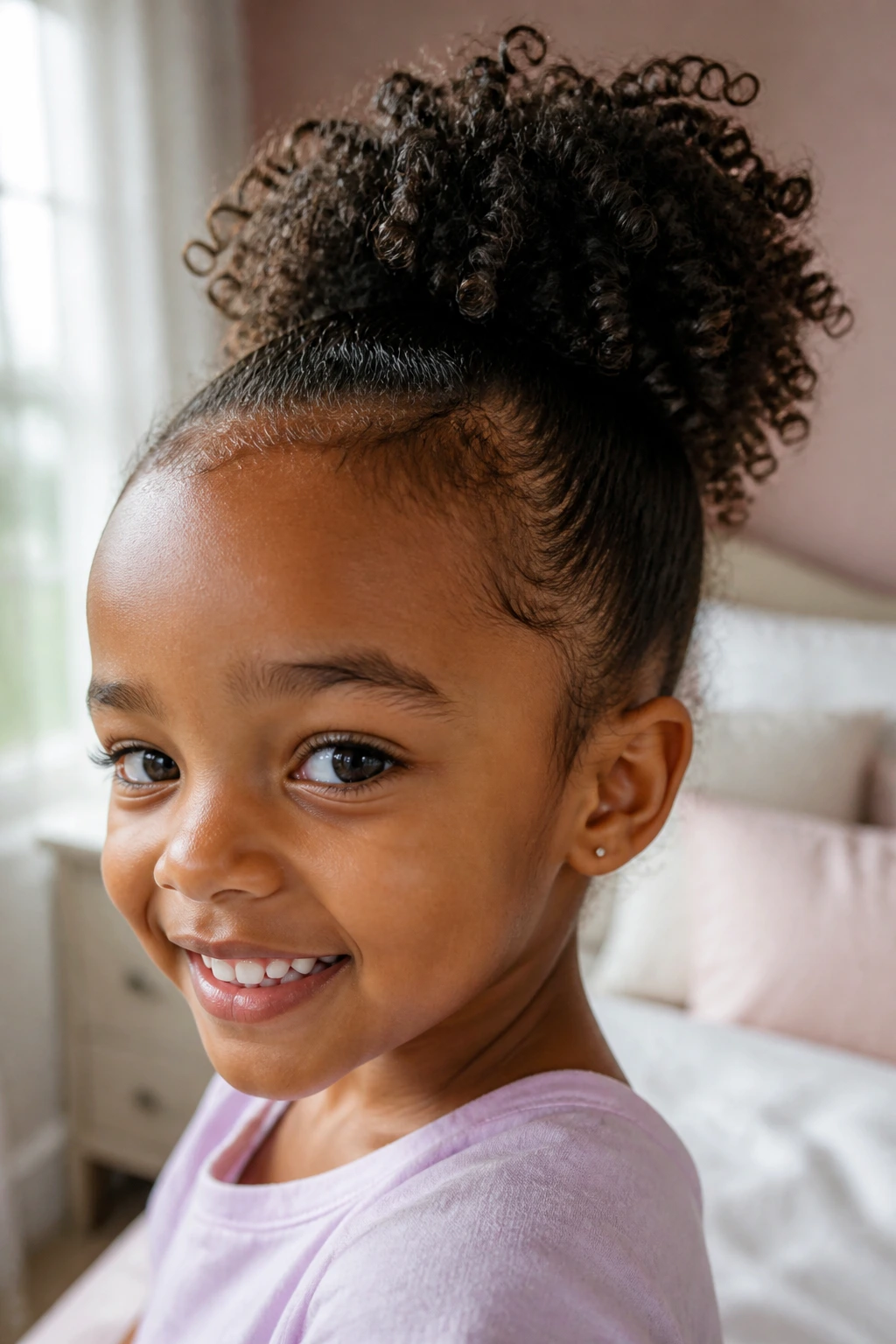
A curly puff pony works with the curl pattern instead of brushing it flat. That matters. Pulling curls too hard into a slick tail often leaves the ends frizzy and the roots sore, which is not the trade you want on a school day. Use your fingers or a wide-tooth comb, gather the curls gently, and let the puff stay round.
A satin scrunchie is kinder than a tight rubbery elastic. If the hairline is delicate, keep the front soft and let a few curls fall out around the face.
11. Center-Part High Pony
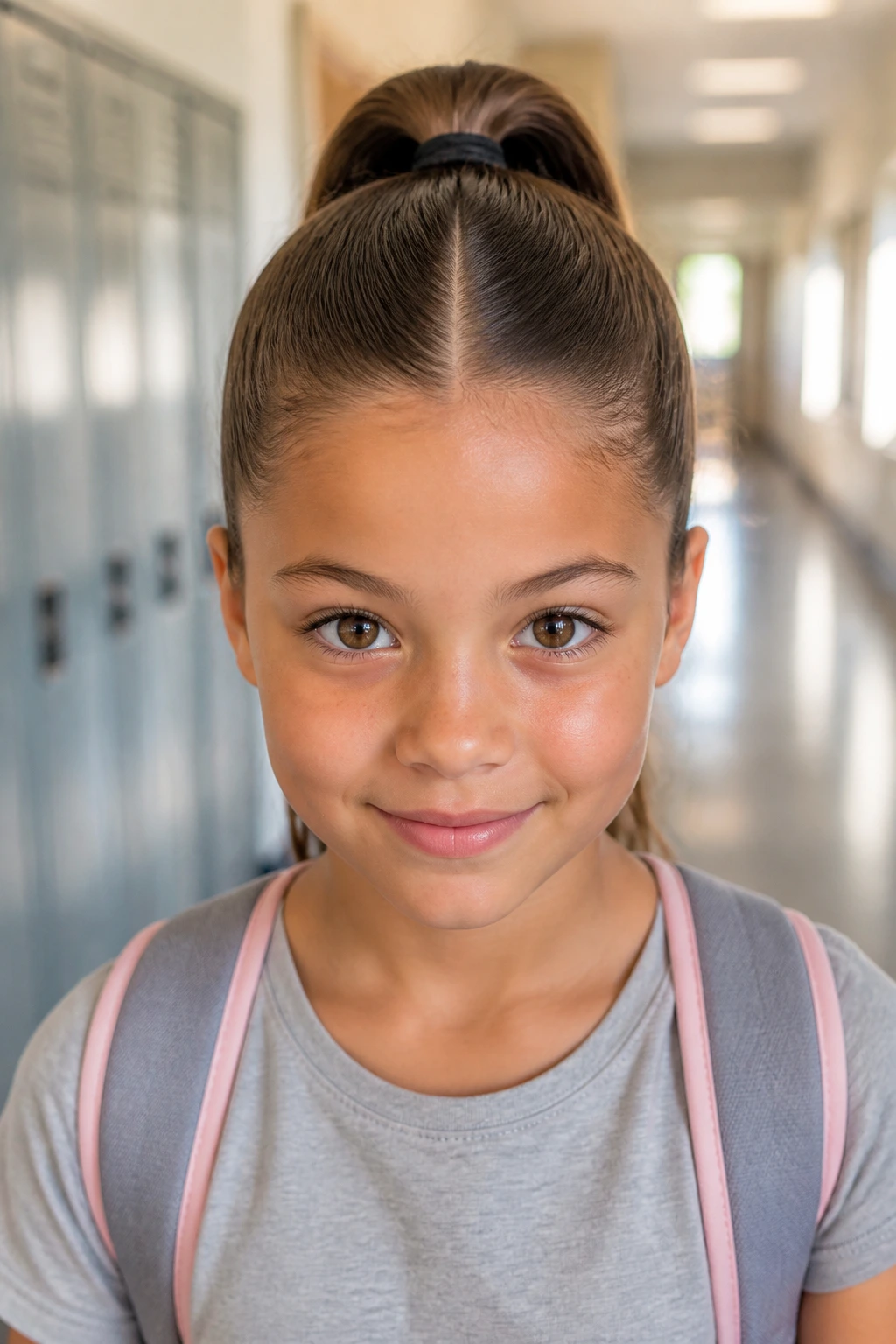
A center-part high pony has a clean, symmetrical feel that looks sharper than a plain high pony. The middle part gives structure, which is handy when the hair is fine and tends to drift. It also makes the ponytail sit nicely under hats, helmets, and hoodies.
The main thing here is balance. If one side is slightly fuller, don’t fight it too much — just adjust the pull so the pony sits centered behind the crown instead of drifting to one side.
12. Dutch-Braid into Pony
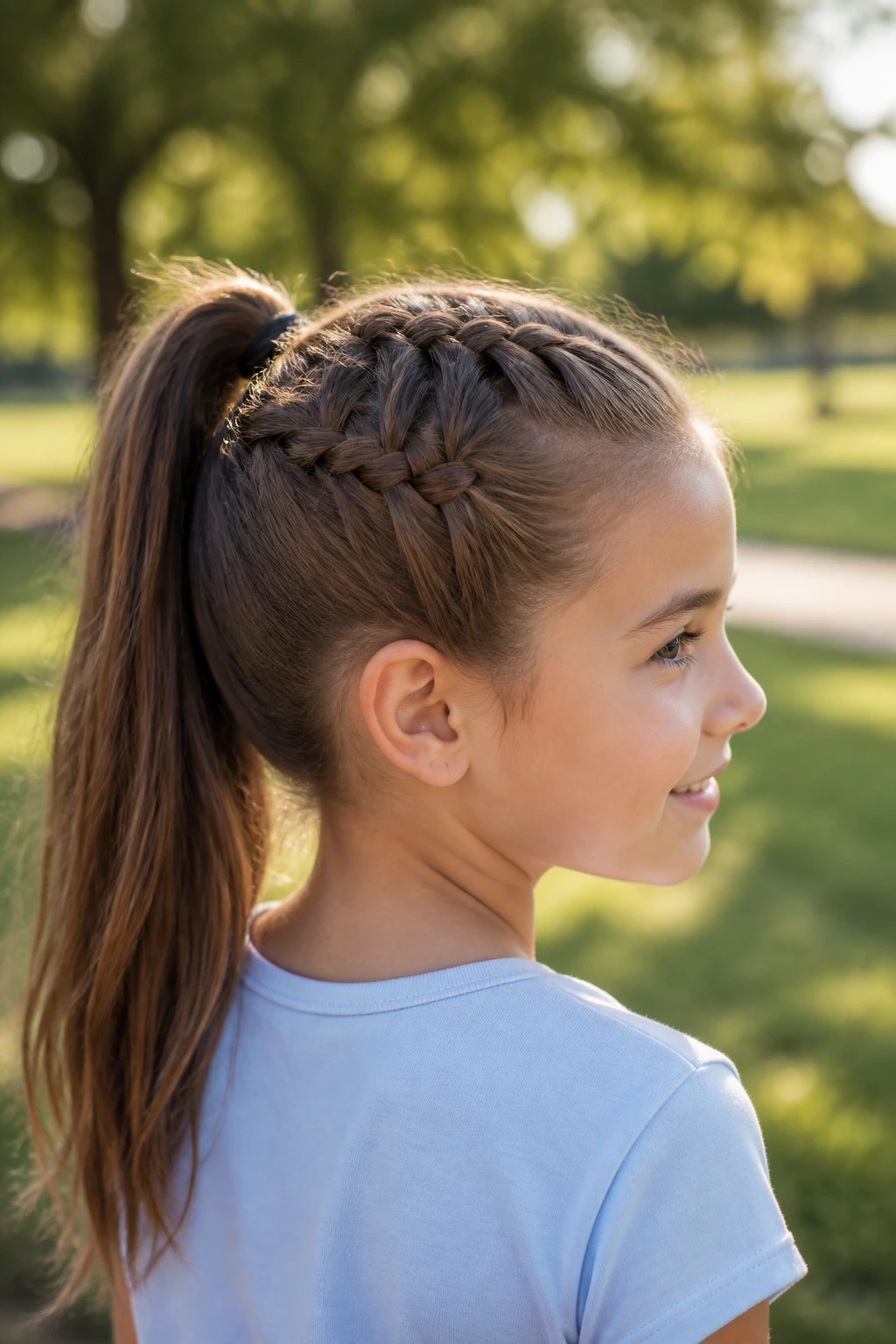
A Dutch-braid into pony keeps the front and top locked down before the ponytail begins. That makes it a strong choice for sports, park days, and kids who do not sit still long enough for a loose style to survive. The braid runs along the scalp, so short pieces stay tucked in instead of escaping everywhere.
Once the braid reaches the crown or back of the head, tie it into a regular pony. If the hair is very long, leave the tail full and loose so the braid doesn’t make the whole style feel too tight.
13. Pull-Through Pony
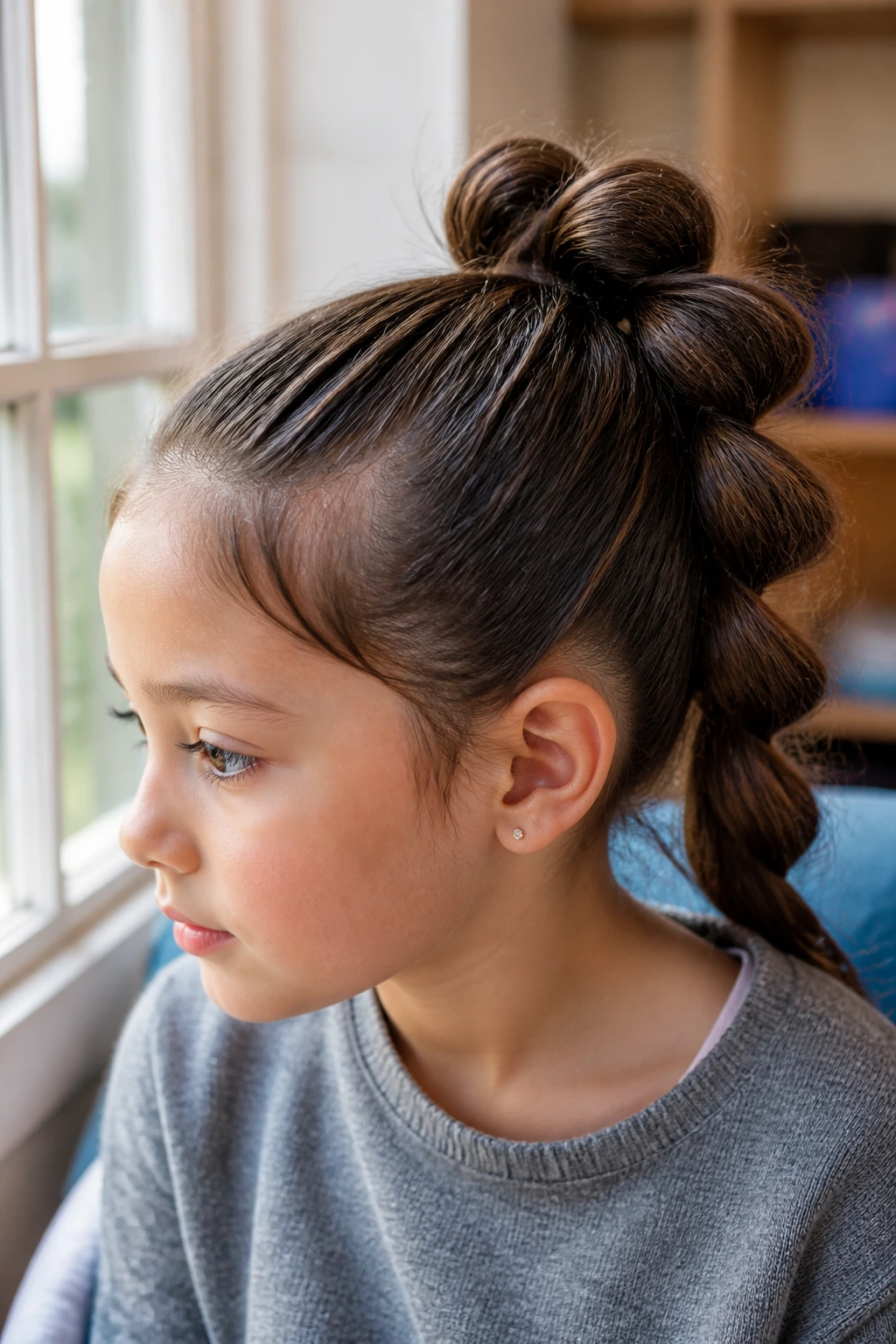
Why do pull-through ponies look so full? Because they fake the look of a thick braid using little pony sections stacked one inside the next. It sounds fussy, but once the first three elastics are in place, the rest goes quickly. The result is dramatic in a way kids tend to love.
How to get the shape
- Start with a high or mid pony.
- Split the tail into two sections.
- Bring a small section from each side over the top and secure below with another elastic.
- Tug each loop a little wider so the sections puff out.
This one is especially good for long, straight hair that tends to look flat in a single tail.
14. Ribbon-Tied Pony
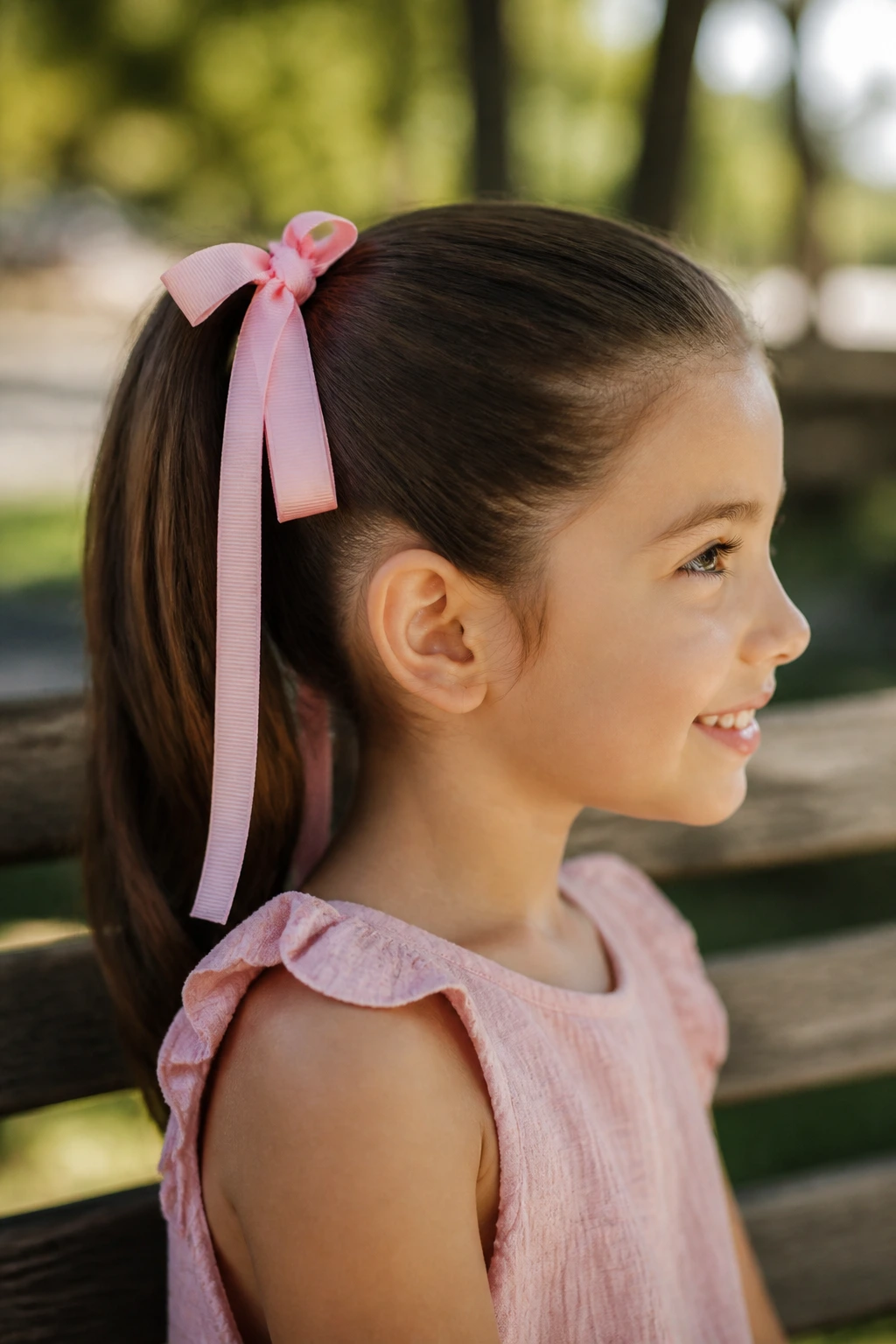
A ribbon-tied pony does not need a complicated base. The ribbon is the point. Tie it around a low, mid, or high ponytail and let the ends hang down, or weave it through the elastic for a more anchored look. Even a simple ponytail looks more deliberate with a ribbon that matches the outfit.
Choose grosgrain ribbon if you want it to hold its shape, not satin that slips every time the child turns their head. That detail matters more than people think.
15. Zigzag-Part Pony
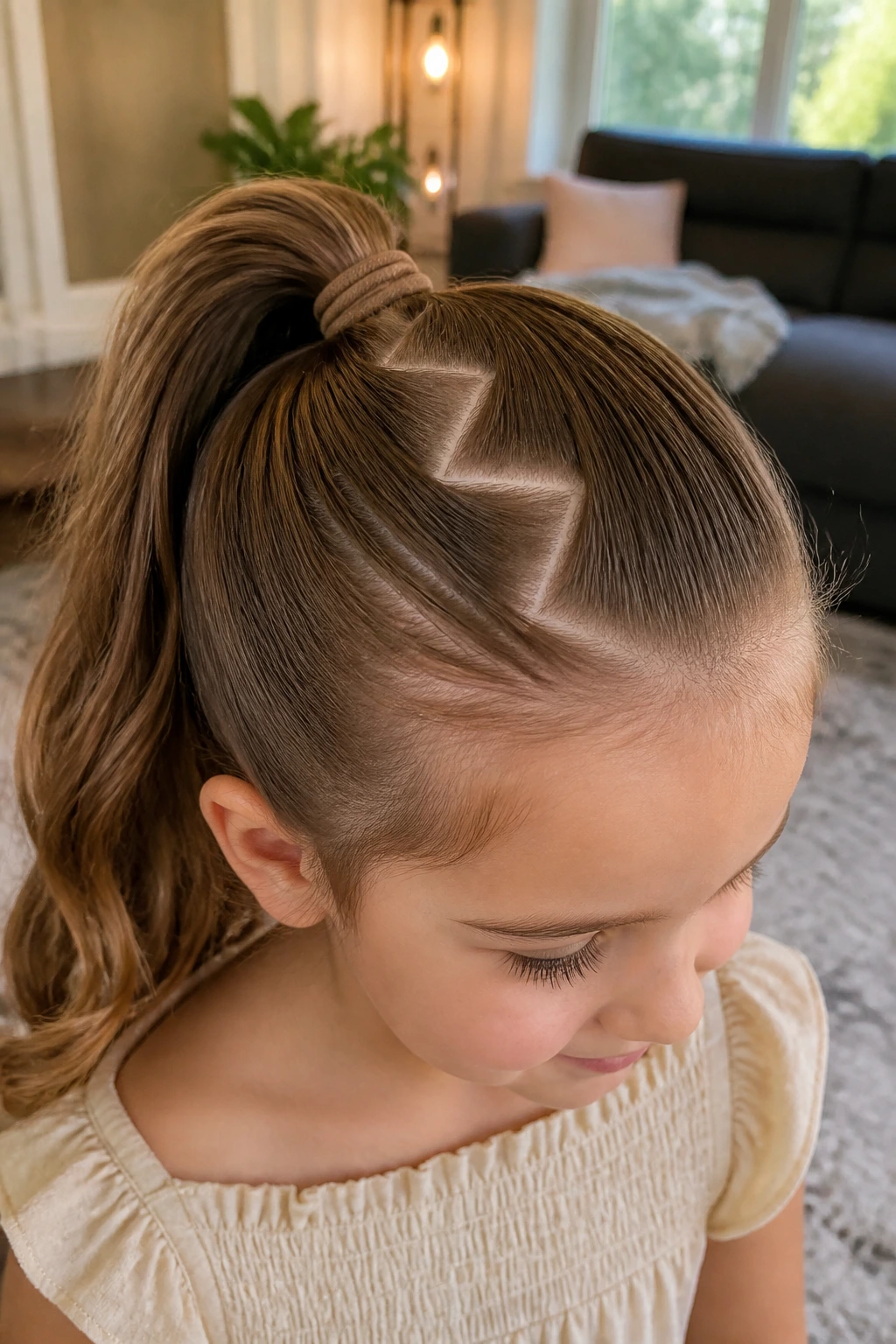
A zigzag-part pony is pure fun, and the part itself does half the styling work. Use the tail of a rat-tail comb to trace a zigzag from forehead to crown, then gather the hair into a ponytail and let the part stay visible. It gives the style energy without needing extra braids or clips.
This one is especially nice when a child wants something different but not too loud. The part creates the surprise; the pony keeps it wearable.
16. Fishtail-Base Pony
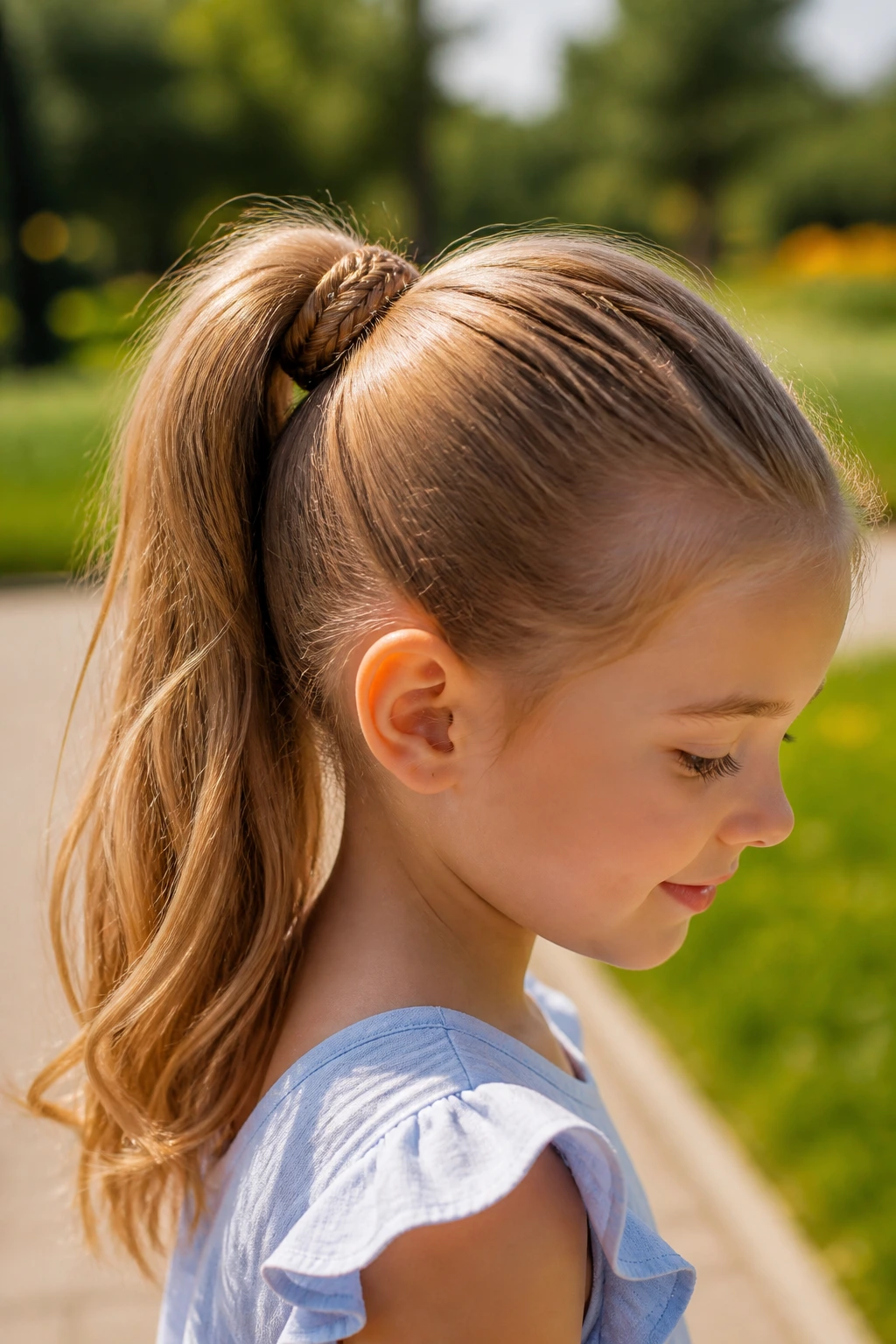
A fishtail-base pony is a neat compromise between plain and fancy. A small fishtail braid around the front or just at the base of the pony gives texture, while the rest of the hair stays simple. It works best when the hair is long enough for the braid to show clearly.
If the fingers are not used to fishtailing, keep the braid shallow and short. One tight little braid near the elastic is enough. You do not need to turn the whole head into a project.
17. Criss-Cross Pony
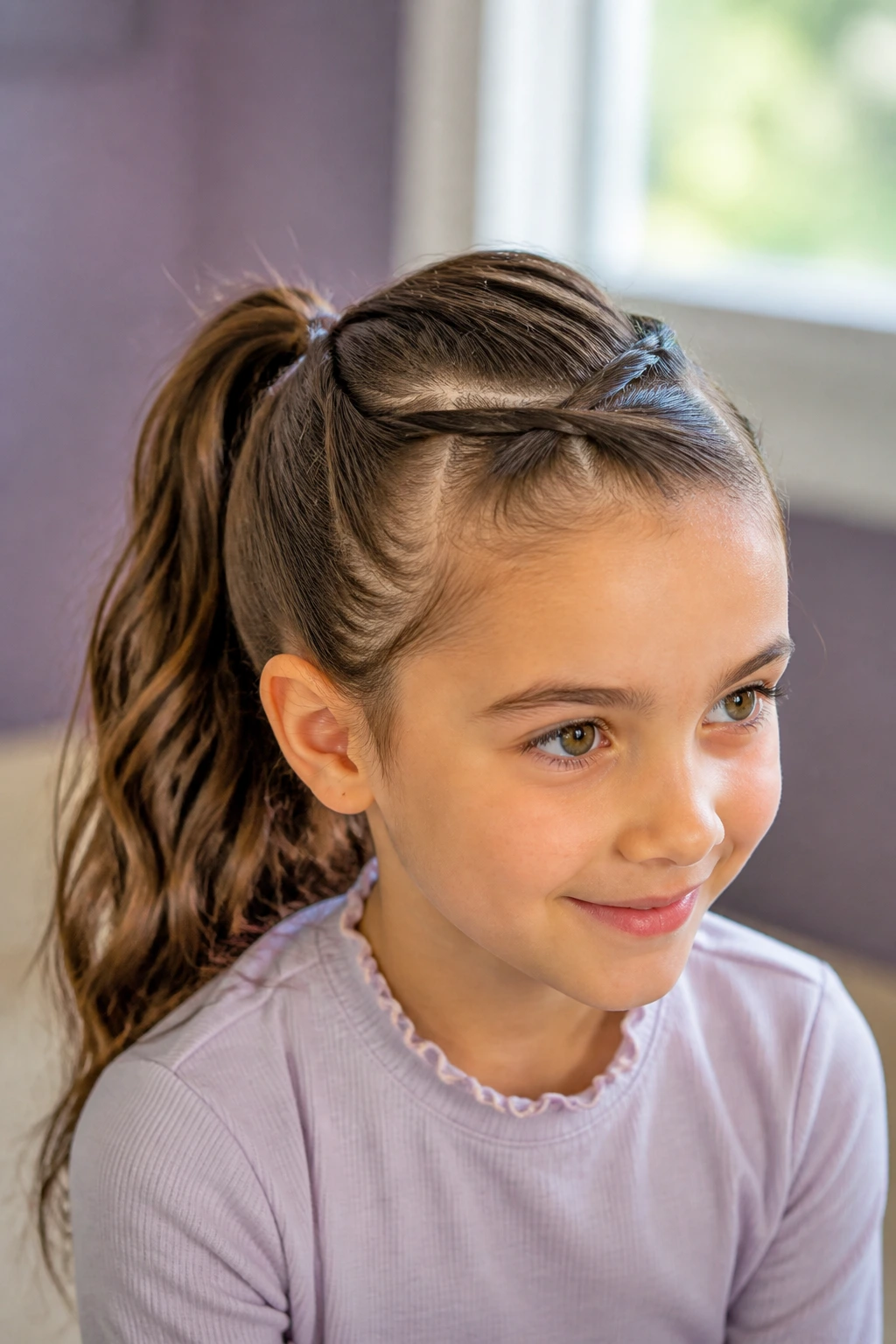
A criss-cross pony looks more complicated than it is. Two front sections cross over each other before they’re gathered into the main pony, which gives the style a built-in pattern at the crown. It’s the kind of detail that makes a basic pony feel intentional without adding heat or heavy product.
This version holds especially well on medium to thick hair because the crossed sections help anchor the front. If the hair is slippery, use a tiny clear elastic to hold each cross before the final tie.
18. Rope-Twist Pony
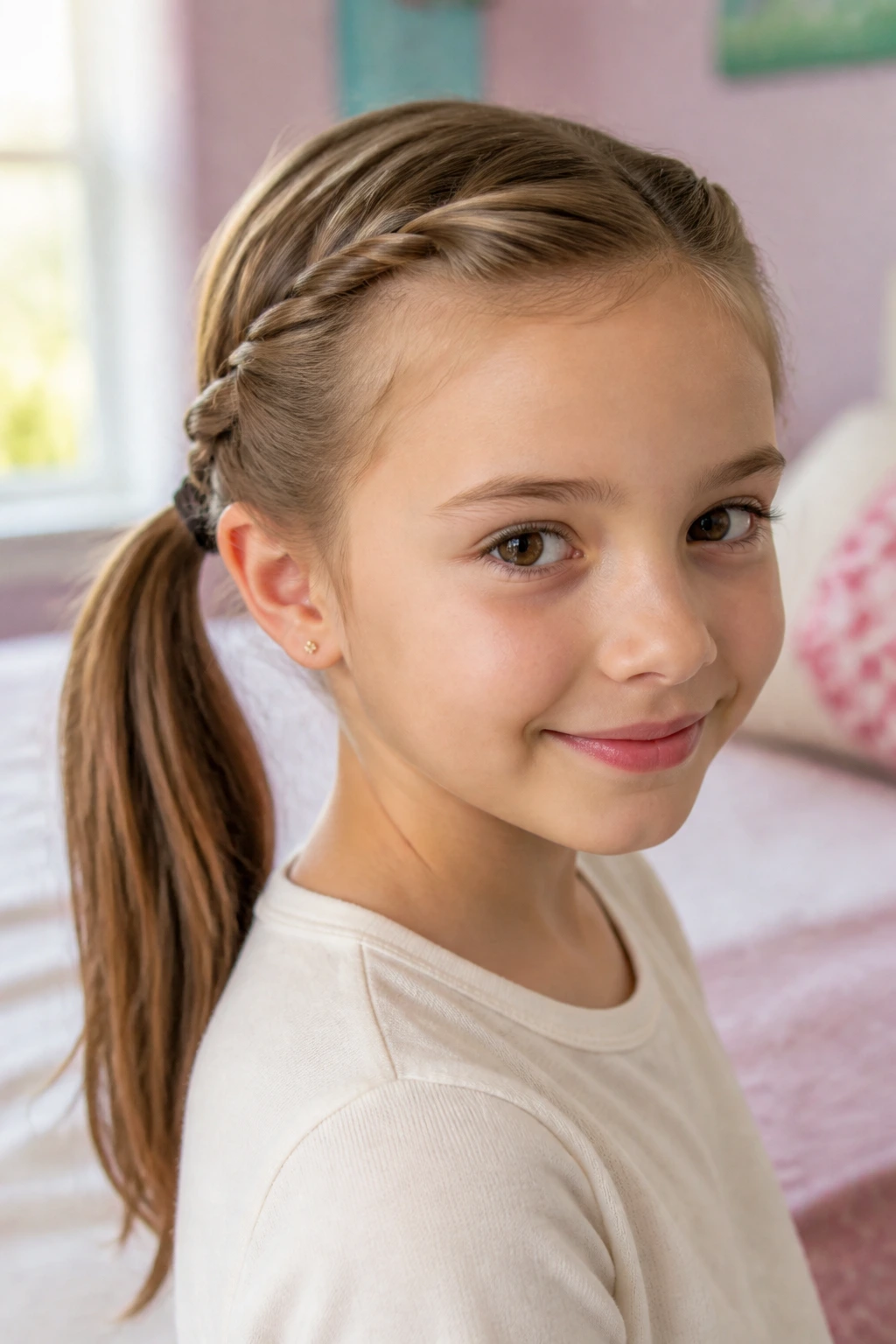
A rope-twist pony uses two strands twisted around each other, and that twist brings a little texture without the precision of a braid. It’s useful for kids who sit still for about thirty seconds, because a rope twist is faster than a neat braid and still looks finished. The twist can start at the temples or just on the sides.
Keep the tension even so one side doesn’t puff out more than the other. If the hair is layered, a small amount of smoothing cream on the front pieces helps the twist stay tidy.
19. Mini-Clip Pony
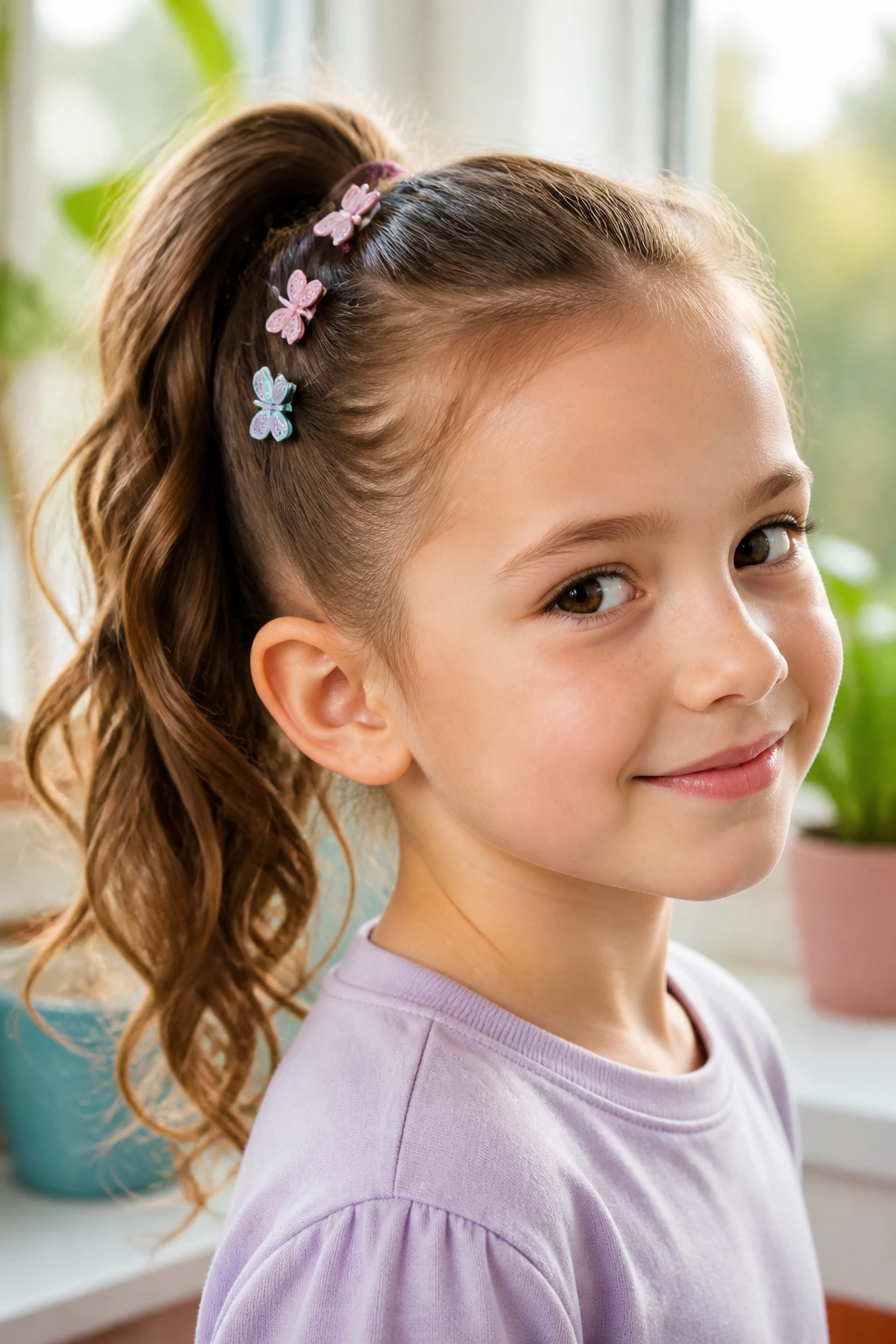
Mini clips can turn a simple ponytail into a tiny style statement. Add them along one side of the pony, line them across the part, or cluster two or three near the base. The pony itself stays easy; the clips supply the personality.
This works nicely for kids who like changing accessories more than changing the whole hairstyle. Just do not overload the head. A few clips are enough. Too many, and the style starts sounding like a toy drawer.
20. Beaded Pony
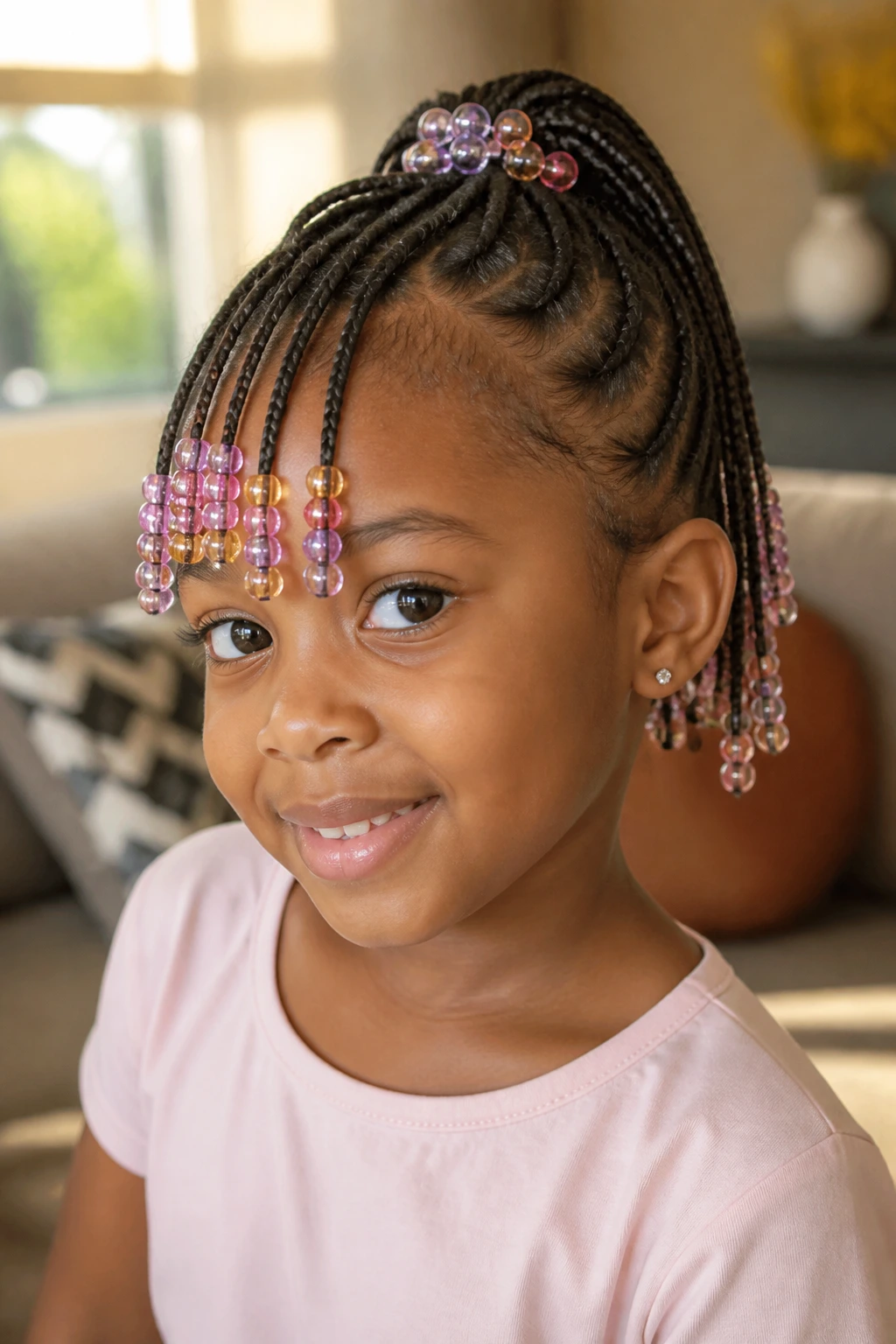
A beaded pony is a strong choice for textured hair and for kids who enjoy a little movement at the ends. Beads can sit on the ends of braided sections before the pony is gathered, or they can decorate the tail itself if the hair is long enough. The sound of the beads is part of the charm, honestly.
Use lightweight beads and secure them well. For younger kids, skip anything sharp or heavy that can tug when the pony swings. Soft movement is the goal, not extra weight.
21. Sleek Low Pony
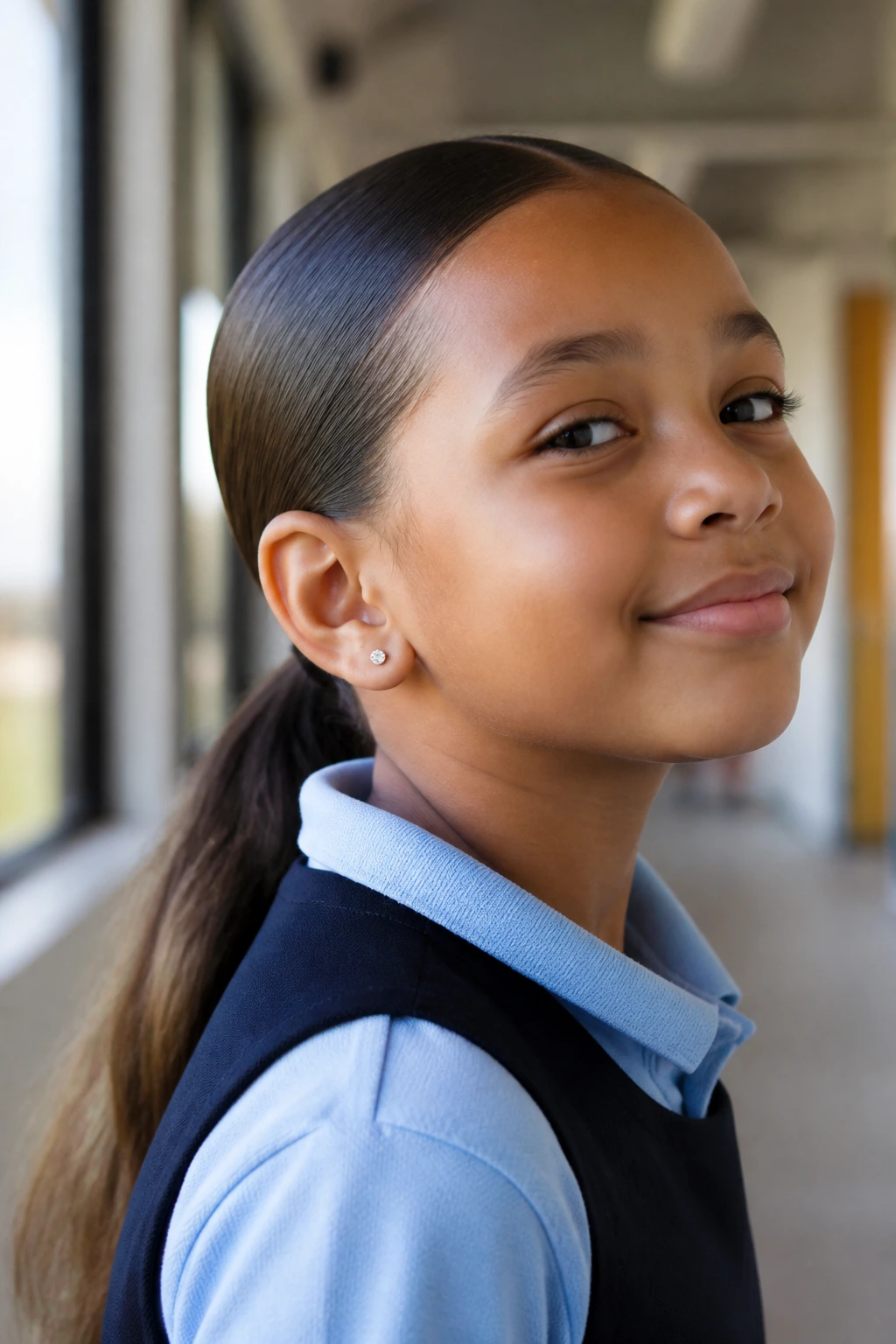
A sleek low pony is the calm, clean version of the style. Everything sits close to the head, the part can be center or side, and the finish looks neat enough for a school concert or a family dinner. It also stays under control better than a high pony when the hair is thick.
A fine-tooth comb or a soft brush makes the surface smooth, and a little gel at the hairline can tame flyaways. Use a light hand. Too much product turns sleek into stiff.
22. High Puff Pony
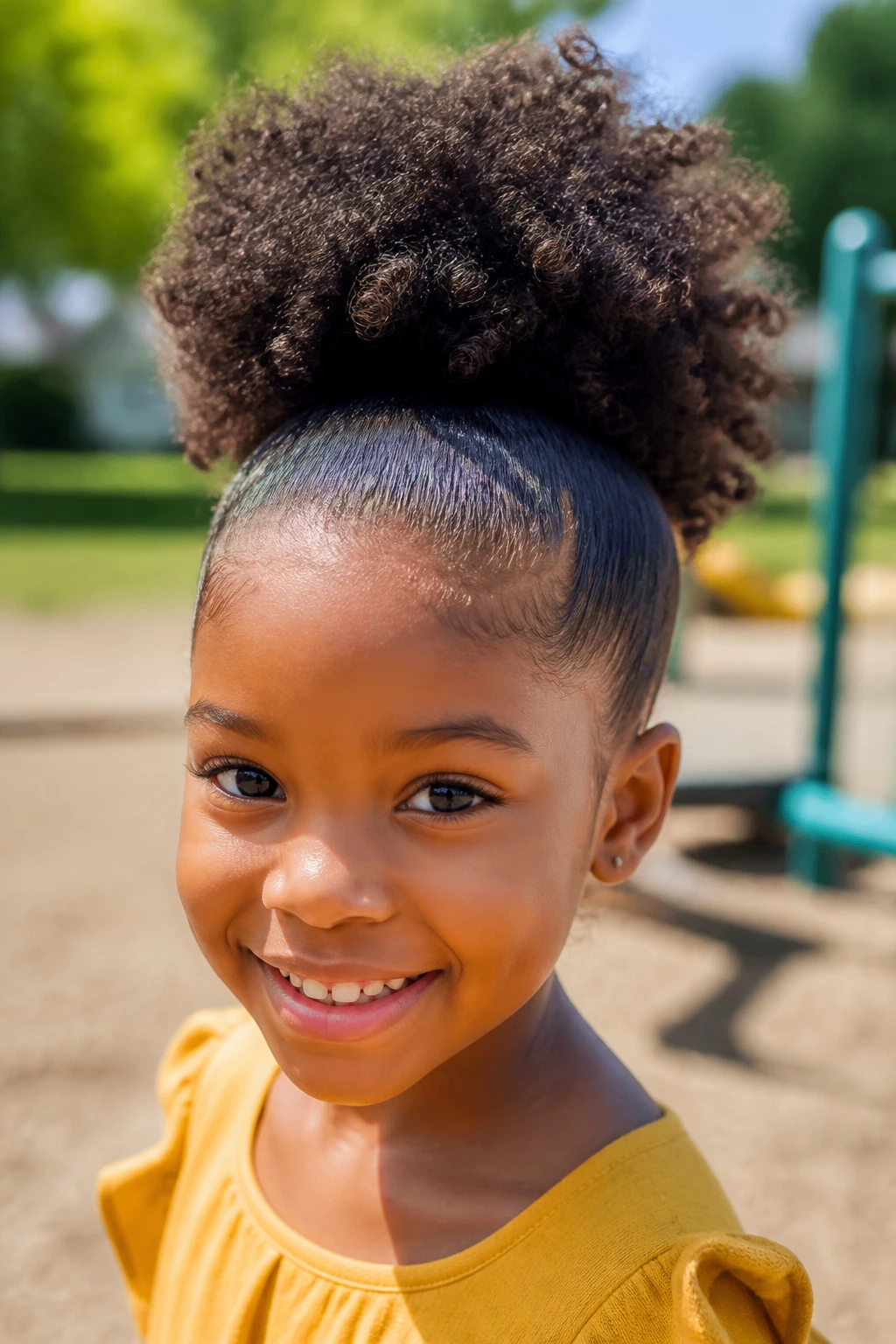
A high puff pony lets coily and curly hair keep its shape while still getting the hair up and off the face. It sits high enough to feel lively, but the texture should stay soft and rounded instead of being flattened down. That balance is the whole point.
Use a wide band or a stretchy scrunchie that won’t snag. If the edges are fragile, brush the hair upward gently with a soft brush and stop as soon as the shape is in place. No need to chase every tiny curl.
23. Side Bubble Pony
A side bubble pony takes the bubble idea and shifts it off-center. The weight of the tail falls to one side, which makes the style feel playful and a little unexpected. It works well on longer hair because the bubbles show up more clearly when the pony has room to hang.
Keep the elastics spaced evenly down the tail, then pull the sections gently so they round out. If the child likes bows, place one near the base and another near the end. That’s a lot of personality from one ponytail.
24. Bow-Stack Pony
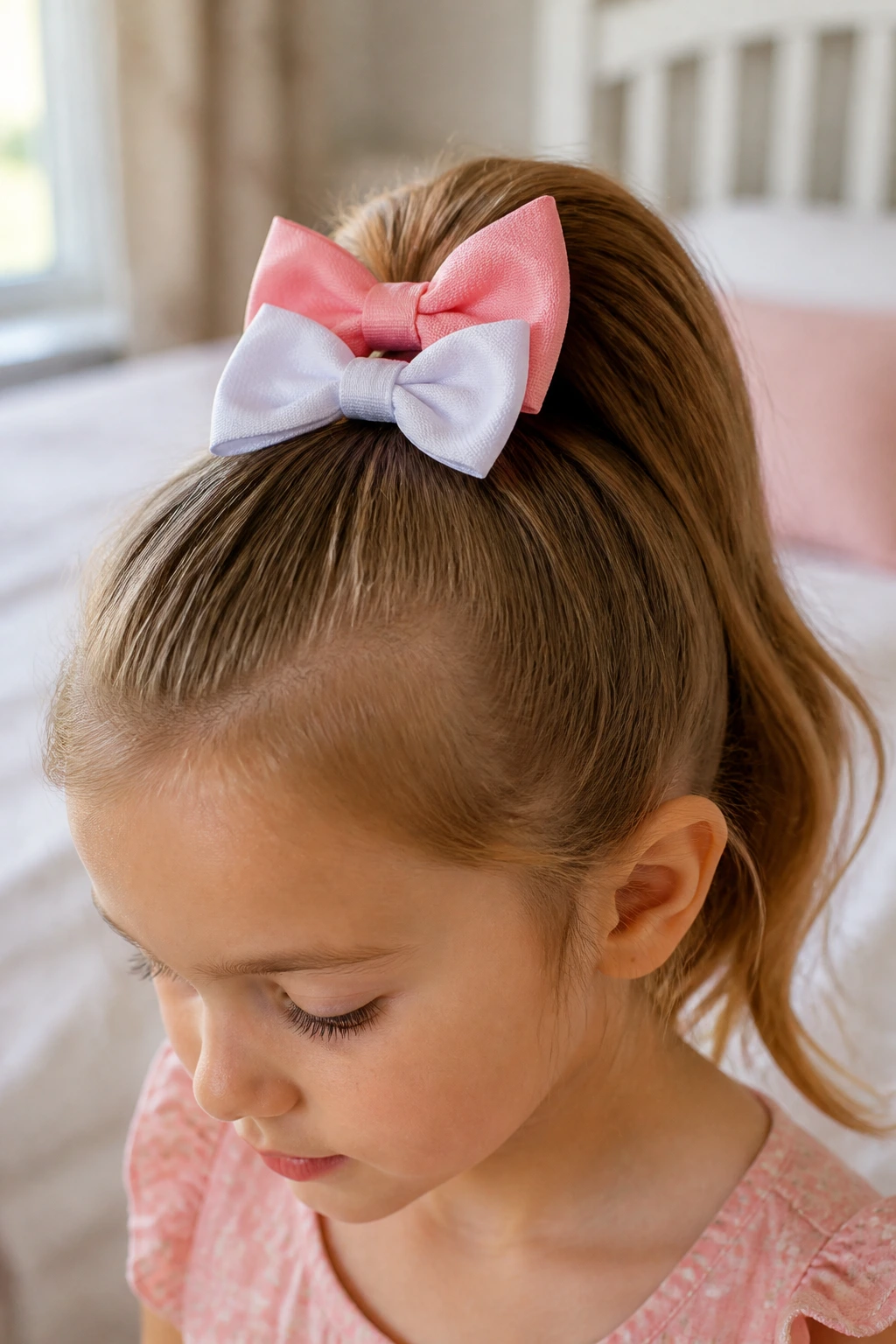
A bow-stack pony is what happens when one bow is not enough. Use a plain ponytail as the base, then layer a bow on top of the elastic or add a second smaller bow below it. The trick is to keep the shape tidy so the bows look intentional instead of crowded.
I like this for birthdays, photo days, and any morning when a child wants the hairstyle to feel special without making the whole head complicated. The pony stays simple. The bows do the celebrating.
25. Messy Play Pony
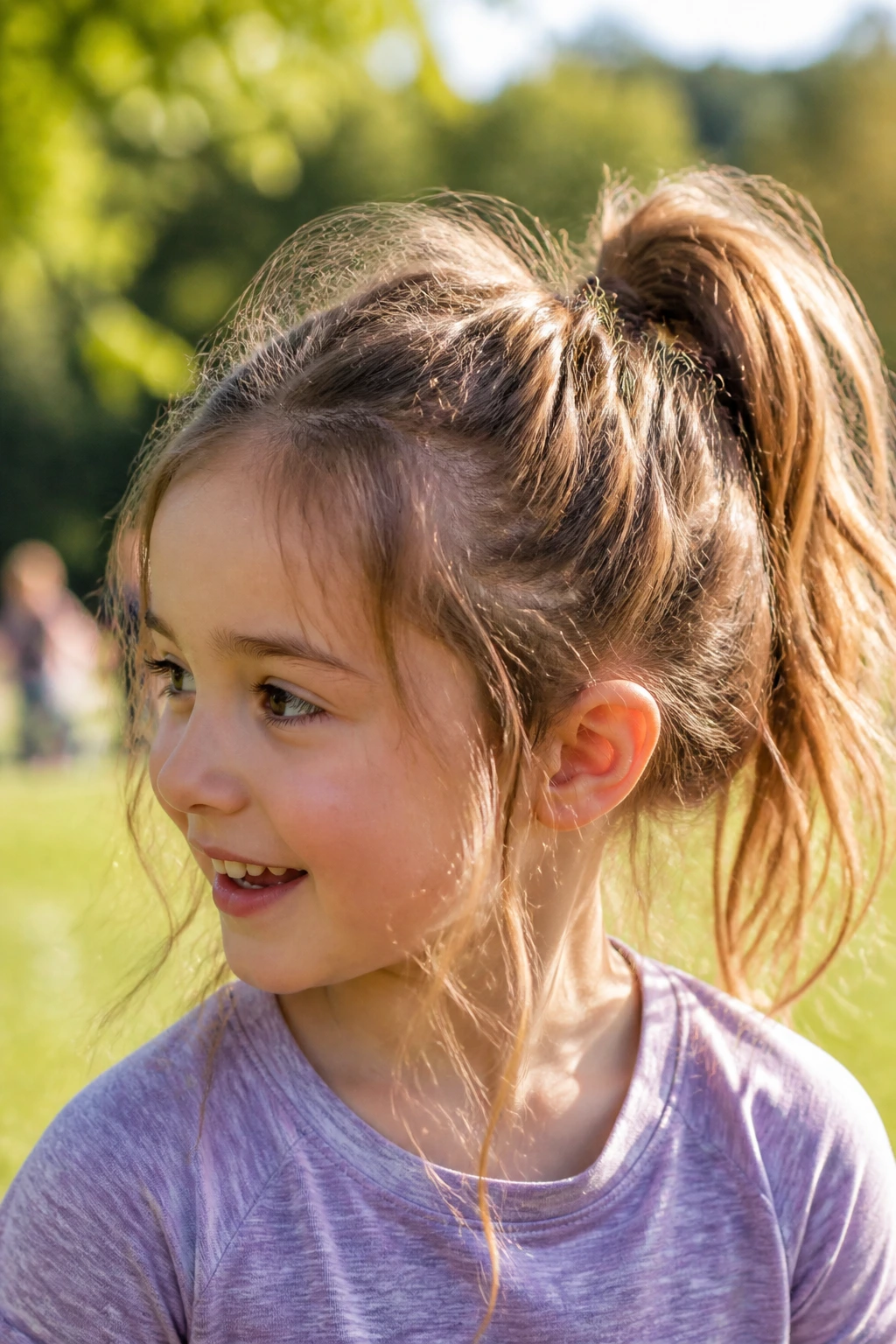
A messy play pony is not sloppy. There is a difference. The front can stay a little loose, the part can be imperfect, and the tail can have natural texture instead of being brushed into a helmet. It works because the looseness hides the fact that kids move nonstop.
This is the style for park days, playgrounds, and afternoons when you know the hair will get redone anyway. A few face-framing pieces make it softer. Leave them out on purpose, not by accident.
26. Faux Hawk Pony
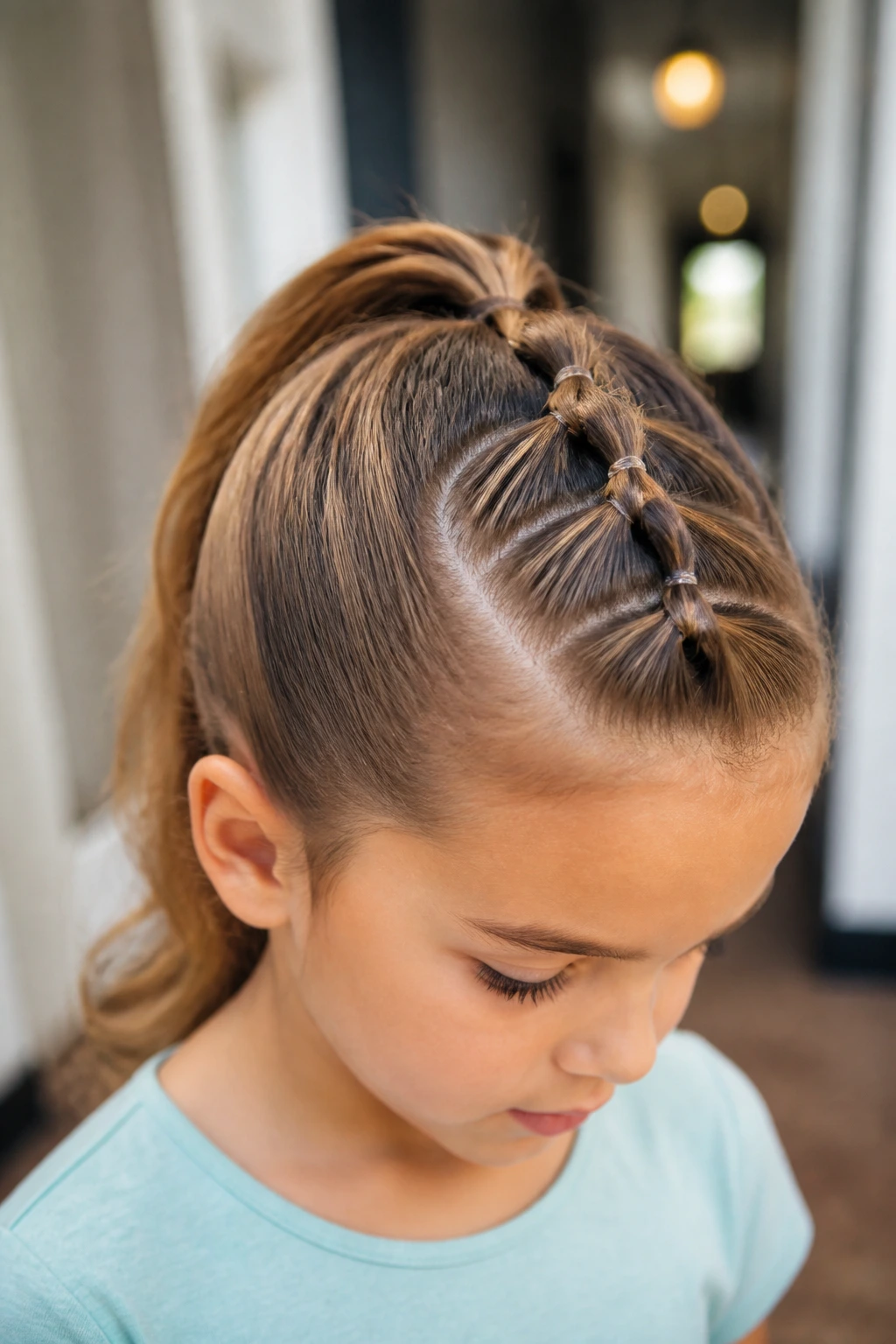
A faux hawk pony gives the top a little attitude. Small pony sections or clipped puffs run down the center of the head and feed into a larger pony at the back, which creates that ridge effect without cutting the hair. It is bold enough to feel fun but still practical.
It works especially well on medium to thick hair. If the sections are too thin, the ridge collapses. Give each part enough hair to stand on its own.
27. Thick-Hair Split Pony
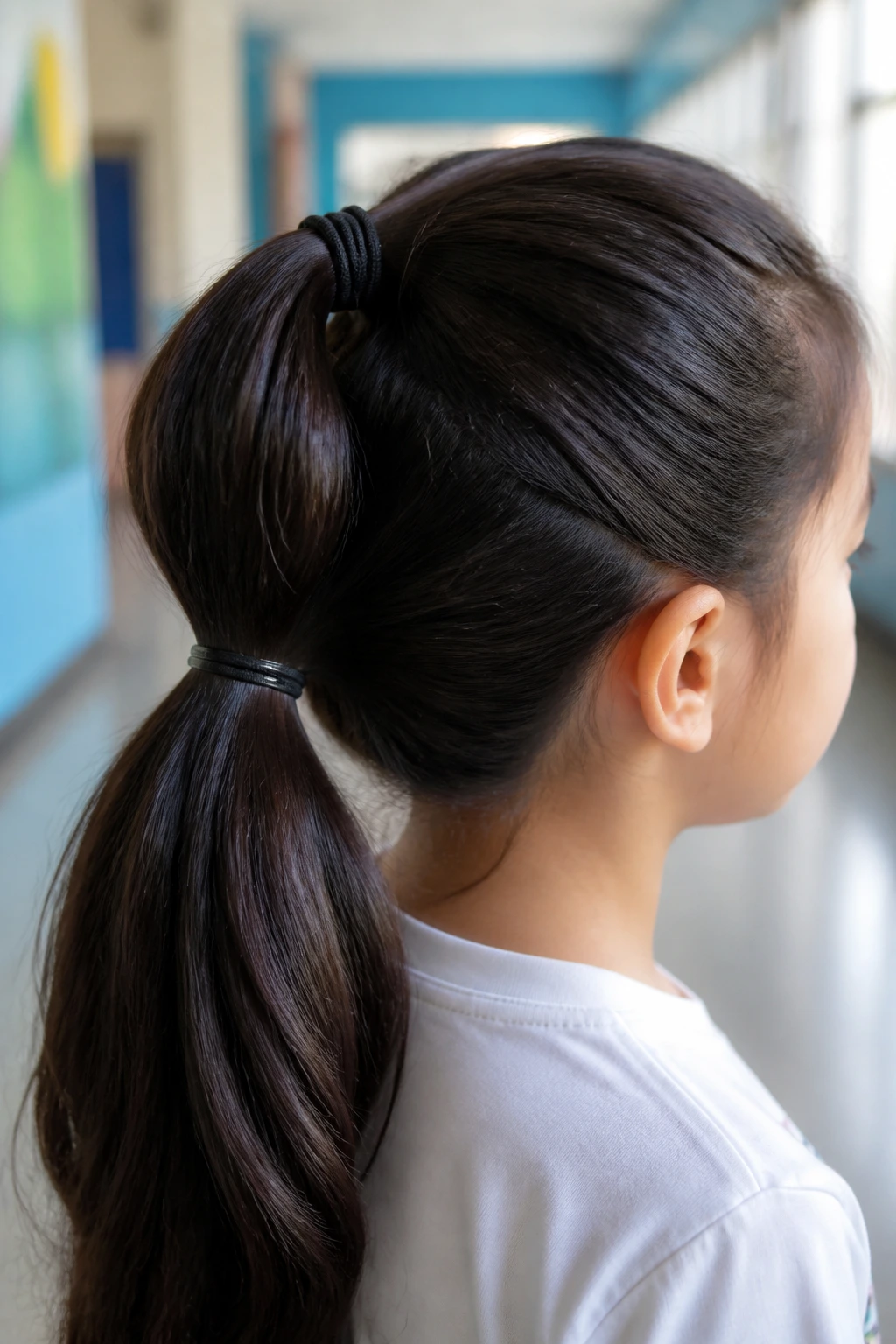
Thick hair often wants to drag a single ponytail downward. A split pony fixes that by dividing the hair into two anchor points — one higher, one lower, or one on each side before joining them. It spreads the weight and keeps the style from sagging by midday.
This is one of those solutions that feels slightly technical until you try it once. After that, it becomes common sense. Dense hair needs support, not one lonely elastic.
28. Fine-Hair Lift Pony
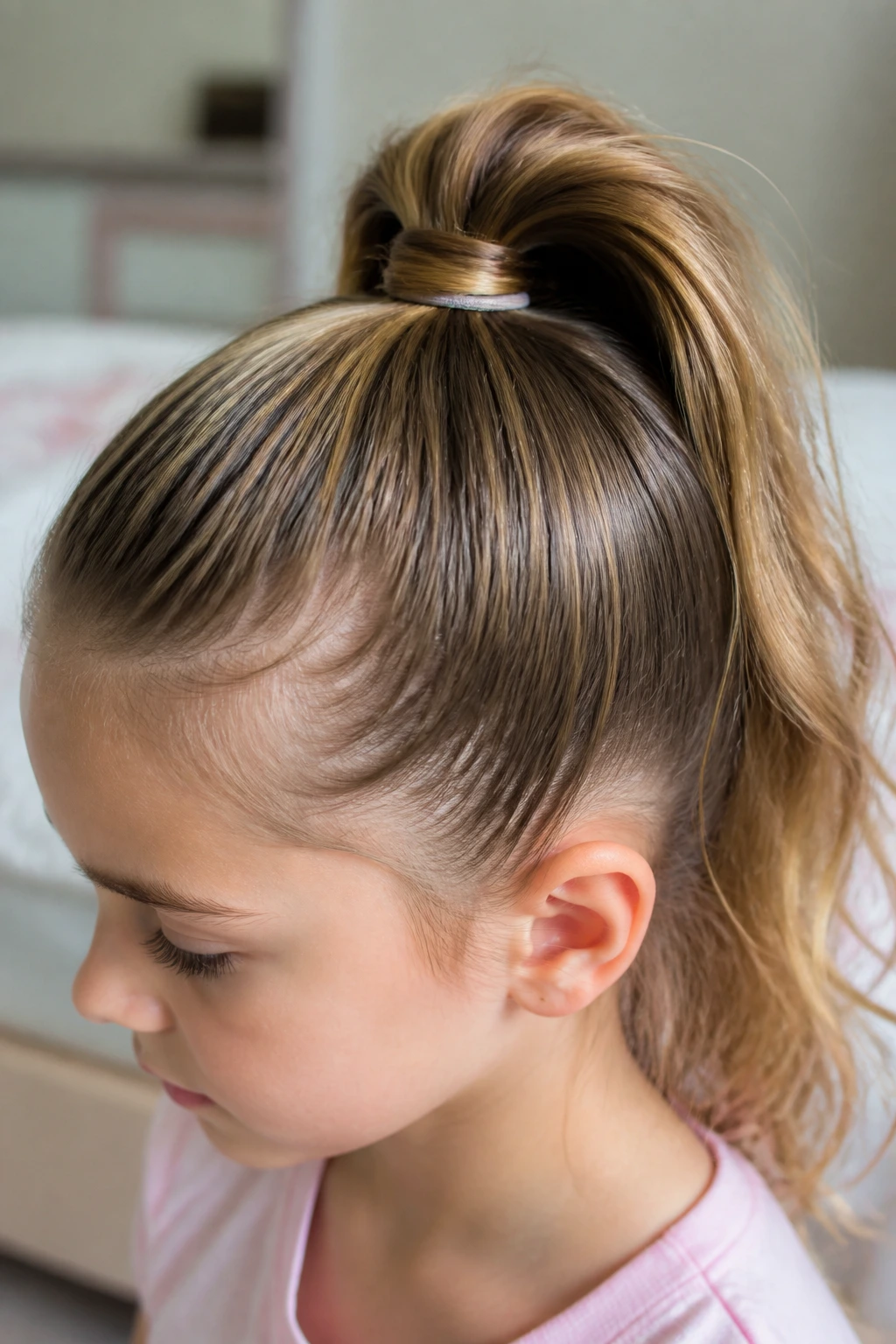
Fine hair slips. It just does. A fine-hair lift pony uses a little extra grip at the roots, a clean part, and sometimes a second hidden elastic close to the base so the pony doesn’t slide down the head. I prefer this to heavy product, which can make thin hair look greasy by lunch.
What helps most
- Start on dry or barely damp hair.
- Use a small amount of detangler only on the ends.
- Place the elastic high enough to avoid neck friction.
- Add a second elastic below the first if the pony droops.
That tiny backup elastic makes a bigger difference than most people expect.
29. Waterfall-Front Pony
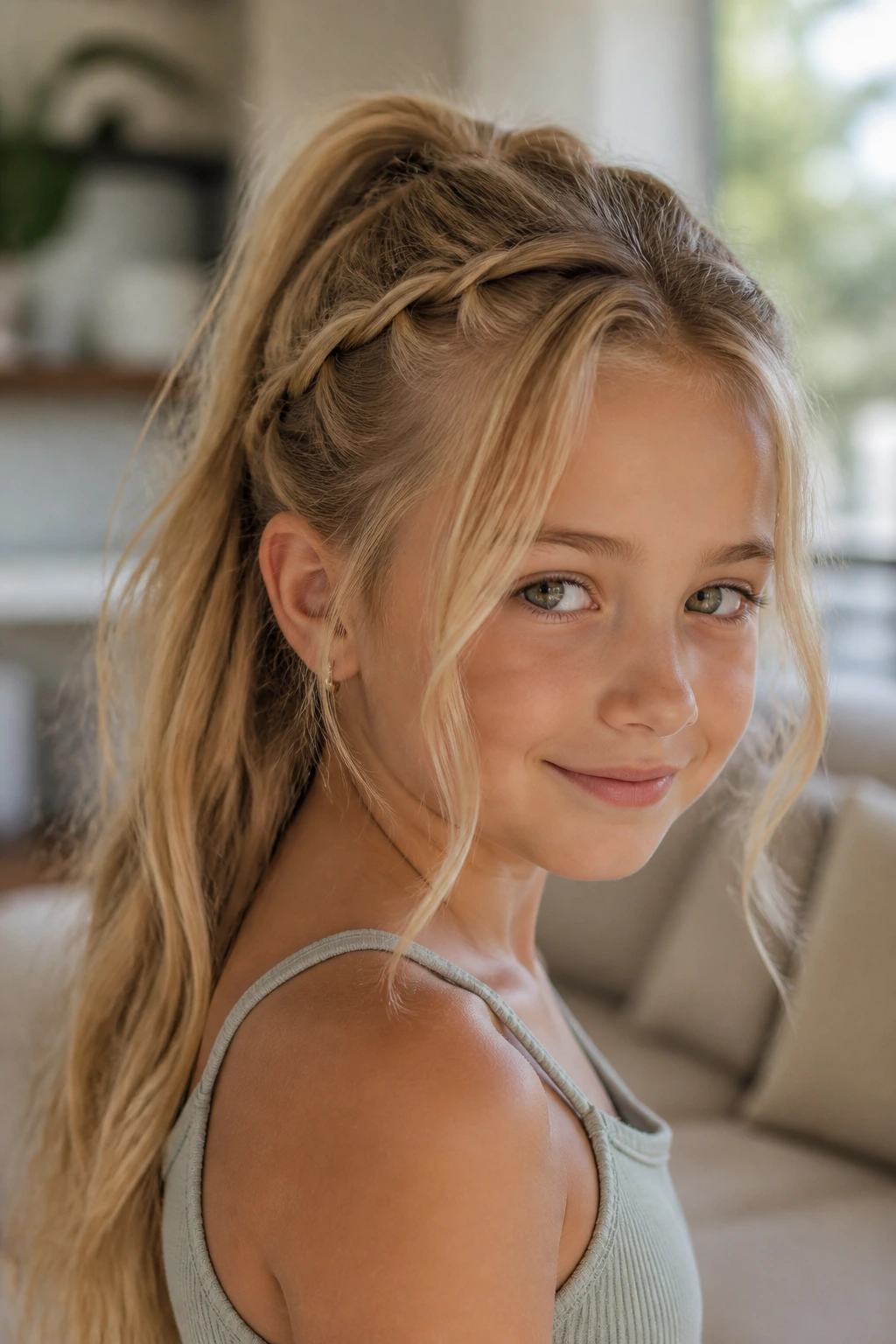
A waterfall-front pony leaves a few front pieces loose and lets them frame the face while the rest of the hair goes back. It softens the look, which can be handy for kids with strong cowlicks or a strong center part that never sits exactly where you want it. The style looks less rigid than a full slick-back pony.
Keep the front pieces intentional. If they’re too thick, they fall into the eyes. If they’re too thin, they look forgotten. Somewhere in the middle is the sweet spot.
30. Headband Pony
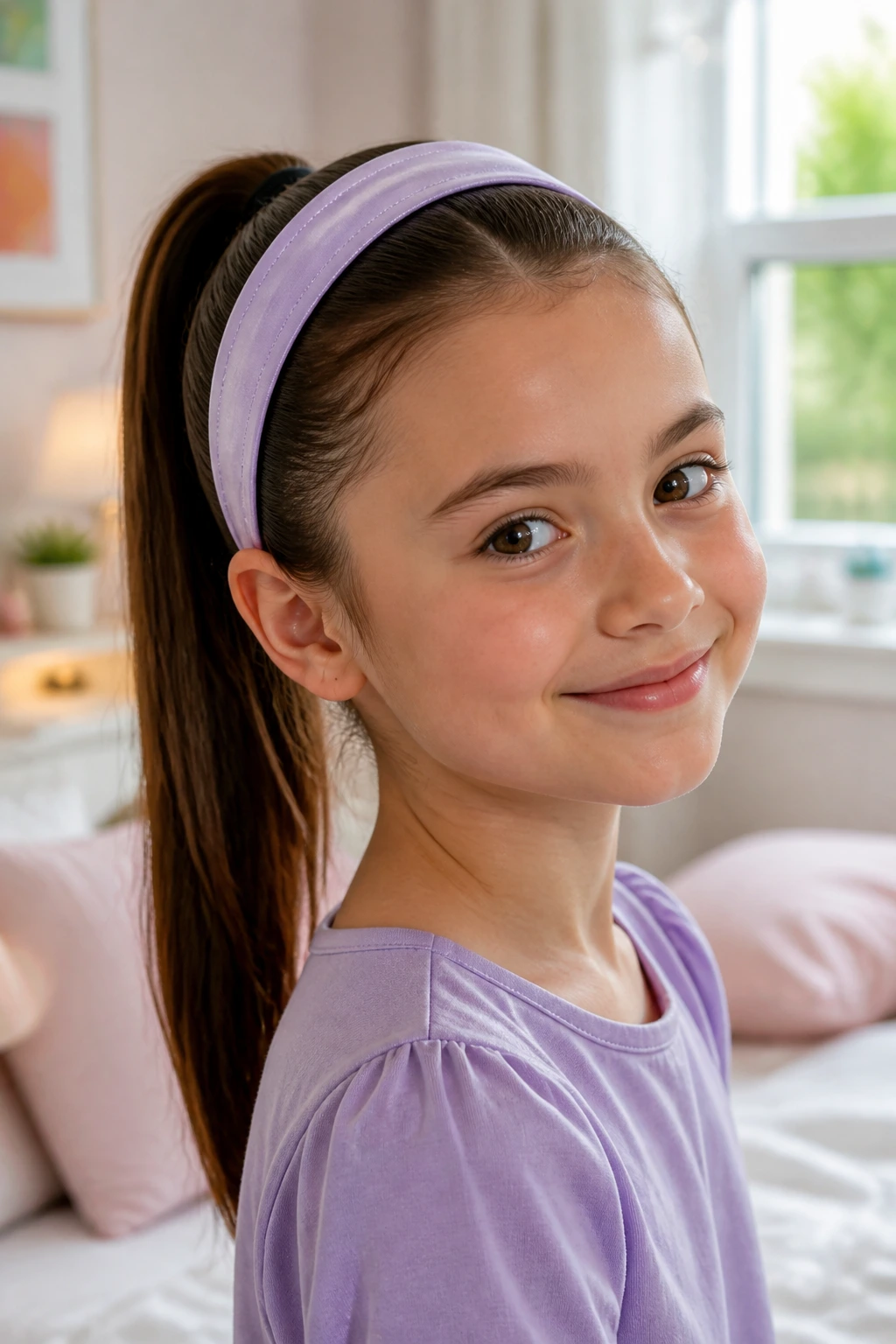
A headband pony uses the headband as part of the styling plan, not just as an add-on. The band keeps short front pieces in place, and the ponytail handles the rest. For kids who have bangs growing out or a fringe that loves to split apart, this is a handy combination.
Pick a soft, non-slip headband if the child will wear it all day. A hard plastic band that presses behind the ears will be taken off before noon. Guaranteed.
31. Sports Double-Elastic Pony
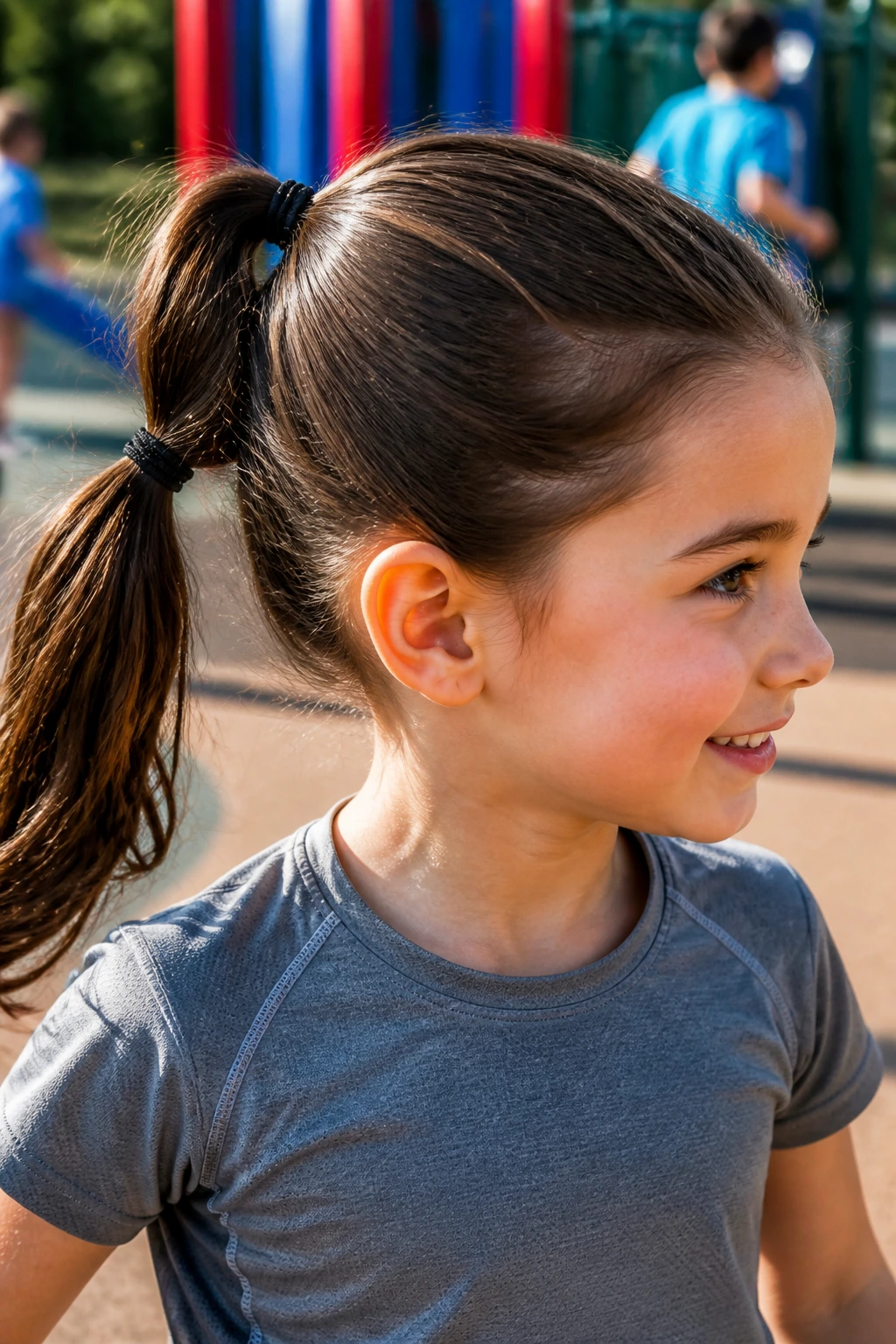
A sports double-elastic pony is built to stay put. One elastic holds the pony in place, and a second one below it adds backup support so the tail doesn’t slide during running, jumping, or helmet wear. It’s plain in the best way.
This style is especially useful for thick or slippery hair. If the first elastic feels too loose after ten minutes, the second one gives the whole look a little more backbone. No drama. Just hold.
32. Sleep-Safe Low Pony
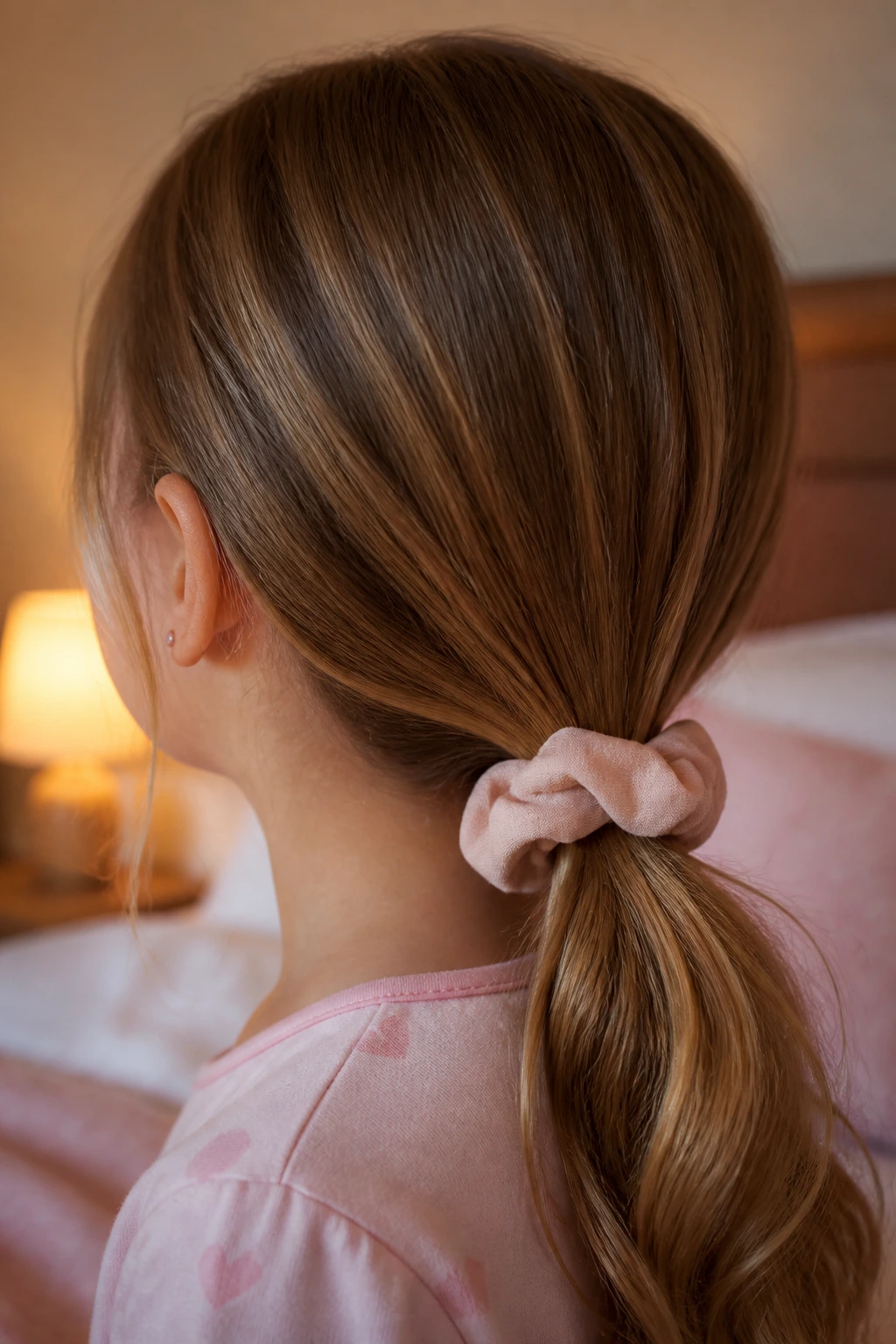
A sleep-safe low pony sits so close to the neck that it can survive a car ride, a quiet nap, or a long stretch on the couch without digging in. It’s looser than a day pony, which matters if the style will stay in for a while and the child is sensitive around the hairline.
Use a soft scrunchie and keep the elastic low enough that it doesn’t press into the skull. If the hair is very long, braid the tail lightly so it tangles less overnight.
33. Glitter-Clip Party Pony
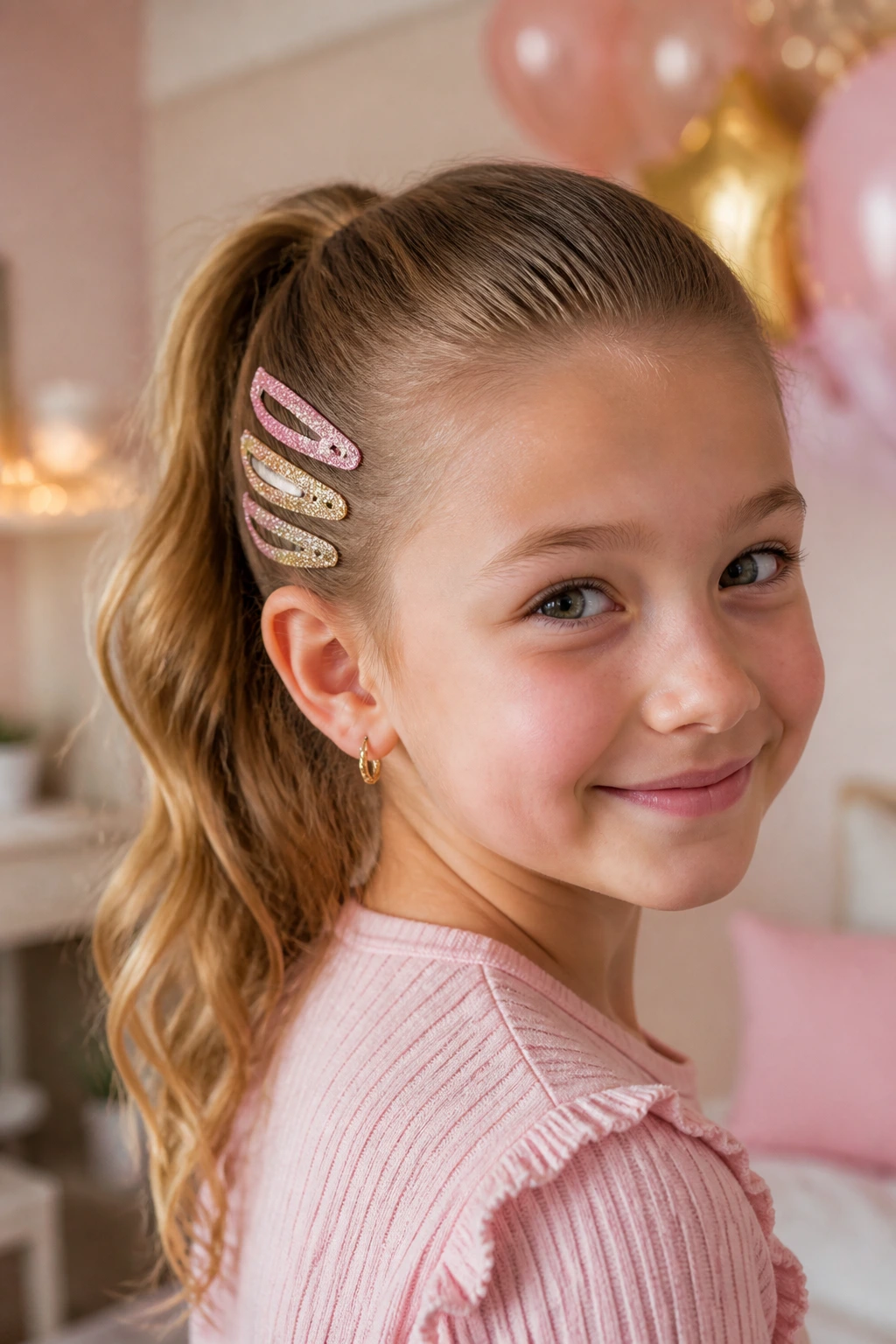
A glitter-clip party pony starts with a simple base and adds one shiny detail. The clips go along one side, above the elastic, or just behind the ear. That way the sparkle feels placed, not scattered everywhere like confetti after a birthday cake ambush.
The base should stay clean and simple so the clips can do the work. A smooth pony, one ribbon, and a couple of glitter pieces are enough. More than that starts to feel busy.
34. Short-Hair Mini Pony
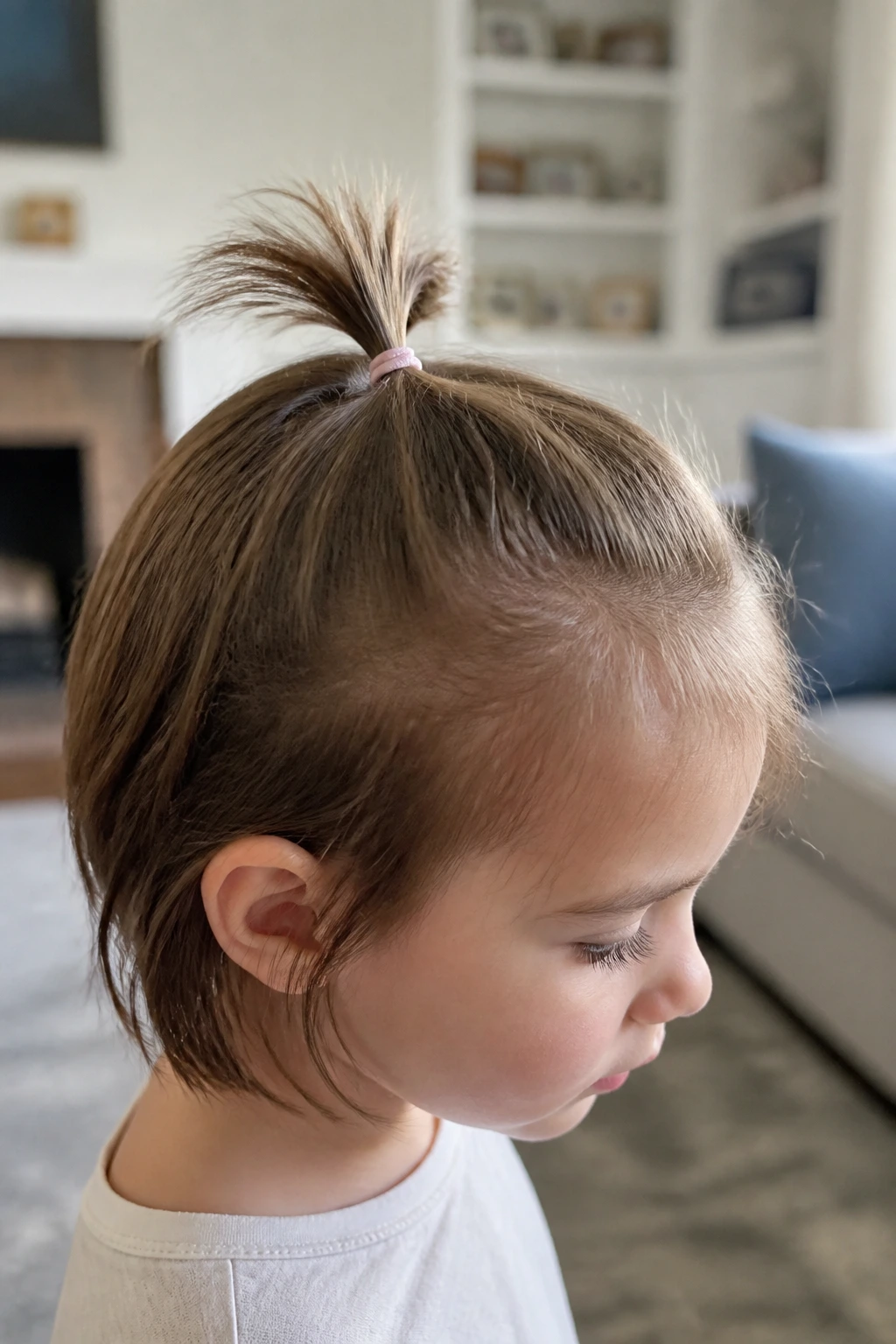
A short-hair mini pony is for kids whose hair barely reaches a full tail yet. Gather the longest section at the back or top and secure it with a tiny elastic. Even a small pony can keep bangs or layers off the face and make the haircut look intentional.
This is a good place for clips, tiny bows, or two small ponies instead of one big one. Short hair needs smarter placement, not more force. If the pony fights you, move it half an inch and try again.
35. Mixed-Texture Pony
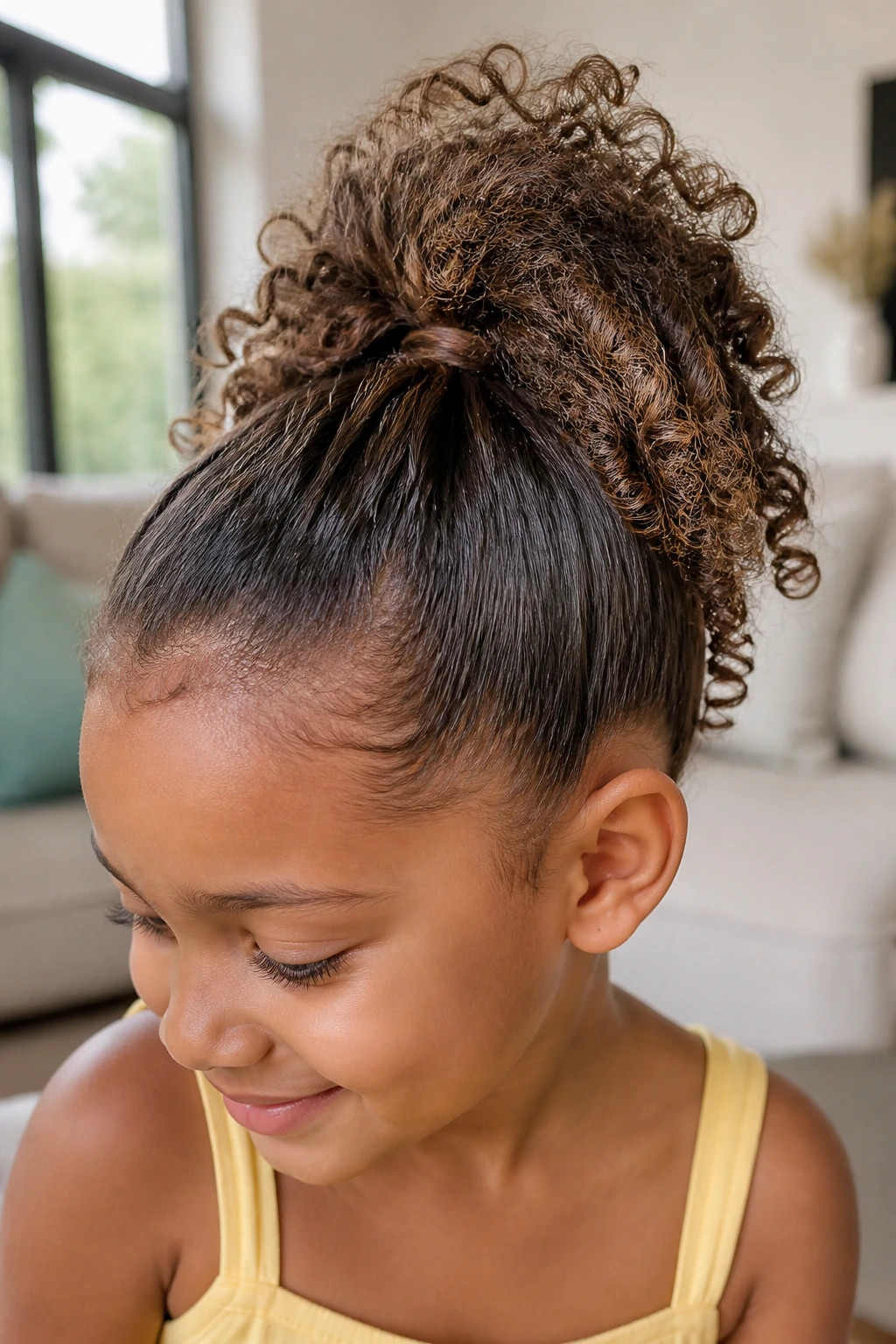
A mixed-texture pony is useful for hair that has different patterns in one head — curls underneath, straighter pieces on top, maybe a few finer sections near the front. The trick is to respect those differences instead of trying to smooth everything into one texture. Leave the curly bits curly, smooth only what needs smoothing, and gather the pony where the hair naturally wants to sit.
That usually gives the style a more relaxed finish. Not messy. Just real.
Why Ponytails Work So Well on Busy Mornings
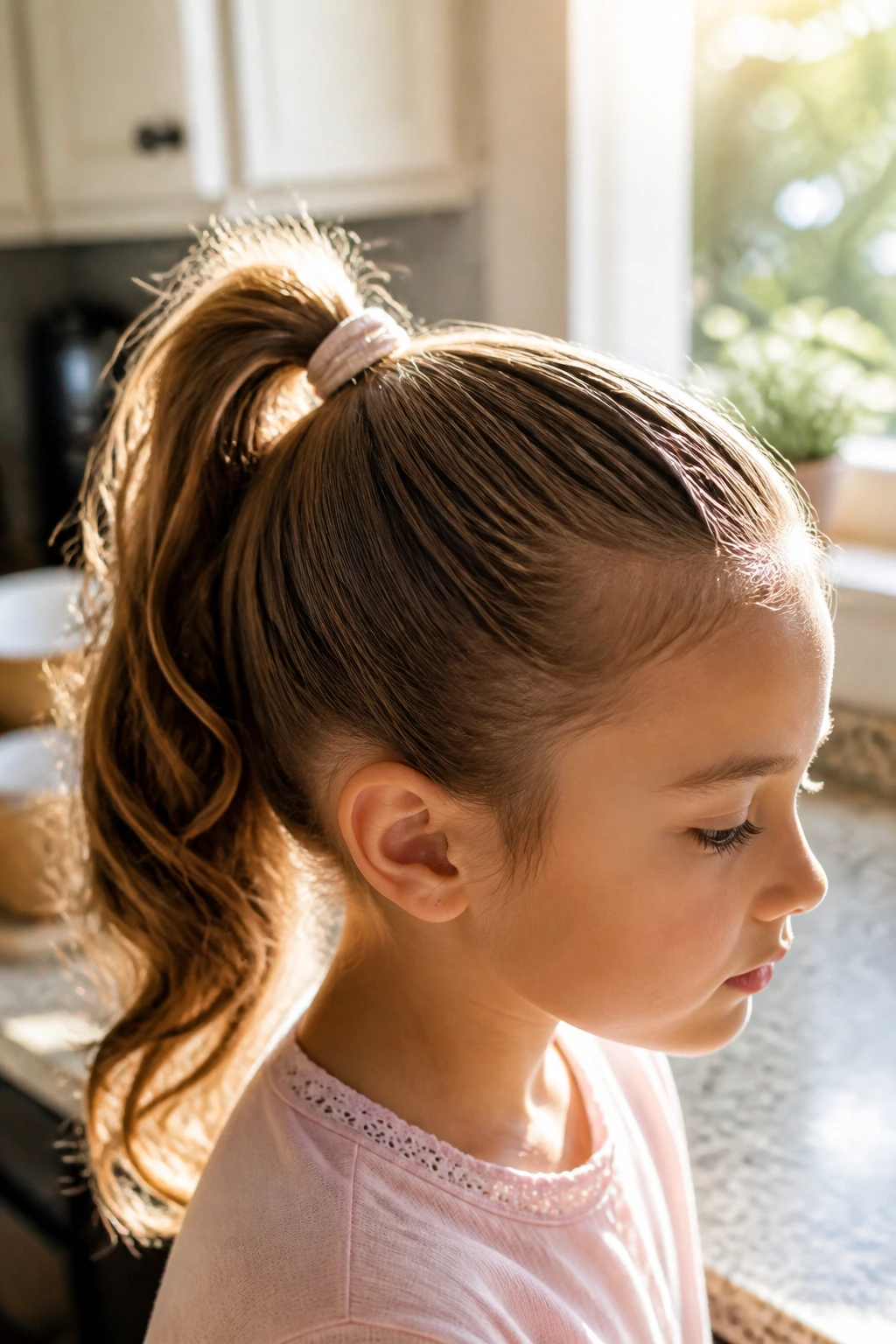
Ponytails give you speed without forcing the hair into one narrow look. A slicked-back pony, a braided pony, and a bubble pony all solve different problems, but the basic move is the same: get the hair away from the face, keep the scalp comfortable, and keep the style simple enough to redo if it gets flattened. That’s why ponytail hairstyles for kids stay in rotation year after year.
They also travel well. A ponytail can handle backpacks, helmets, nap mats, choir robes, sports uniforms, and the general chaos of a child who will not sit still long enough for a complicated style to last. The trick is choosing a version that fits the hair you have, not the hair you wish you had at 7:15 a.m.
And yes, ponytails can look neat. They can look playful too. A ribbon changes the mood. So does a braid, a zigzag part, or one well-placed clip. The style does not need to be elaborate to feel finished.
The Brushes, Elastics, and Clips Worth Having in the Drawer
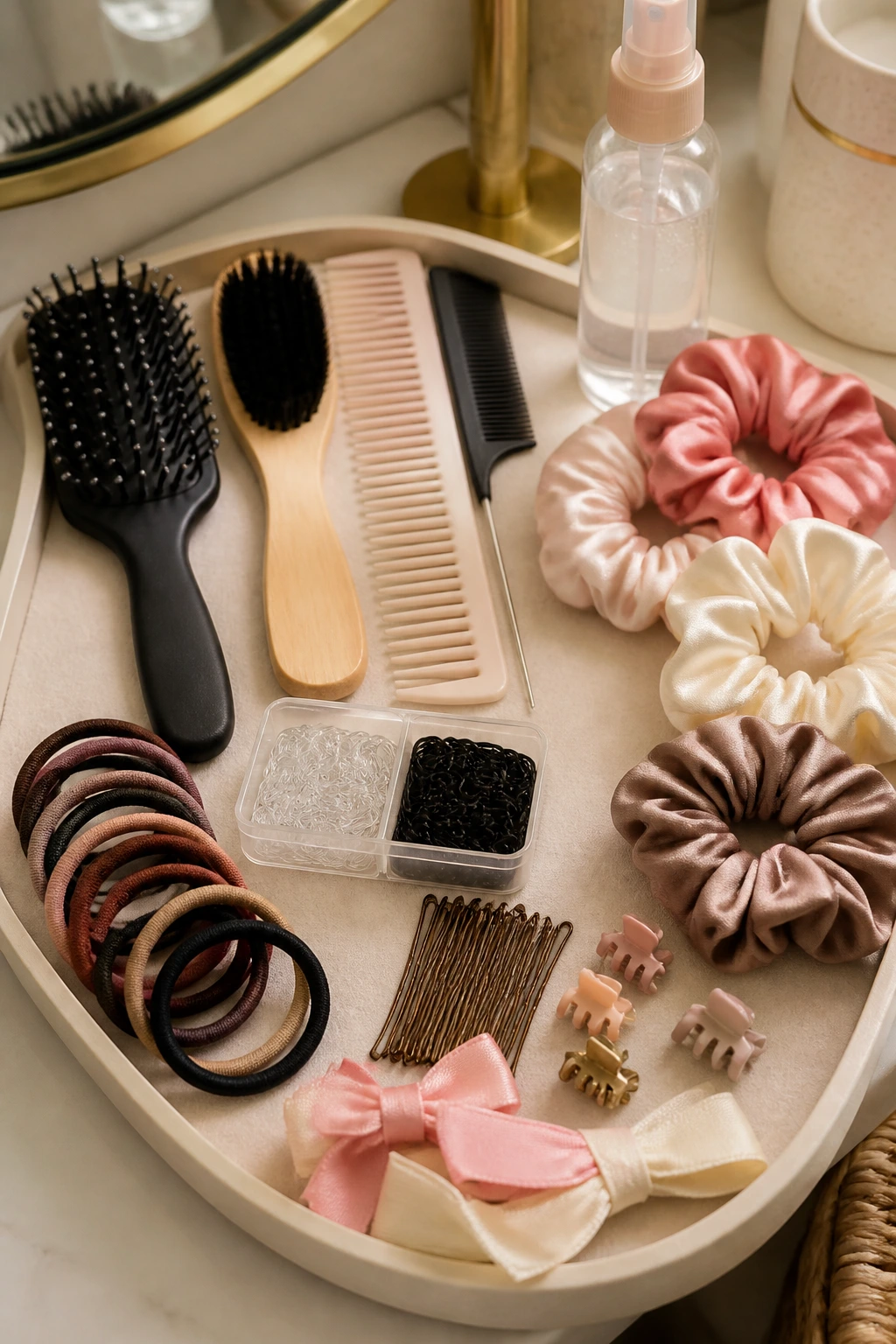
A good ponytail kit makes the whole process faster, and I mean actually faster, not “I bought ten things and still can’t find the brush” faster.
- Detangling brush: A flexible brush with soft bristles helps smooth knots without yanking at the hairline.
- Wide-tooth comb: Best for curls, coils, and wet hair that would puff up if you attacked it with a fine comb.
- Rat-tail comb: The pointed tail makes clean parts, zigzags, and small sectioning much easier.
- Snag-free elastics: Look for the soft kind that won’t pinch or break fine hair.
- Mini clear bands: Useful for braids, bubbles, and small section ponies.
- Satin scrunchies: Softer at the base and kinder for overnight wear.
- Soft bristle brush: Helps smooth the front without scraping the scalp.
- Bobby pins and mini clips: Keep wrapped bases, twists, and loose pieces in place.
- Spray bottle with water: A light mist helps control flyaways and wakes up curls without soaking the head.
- Ribbon or bows: Great for quick changes when a plain pony needs a little personality.
Wet, Damp, or Dry? How to Prep Hair Without a Fight
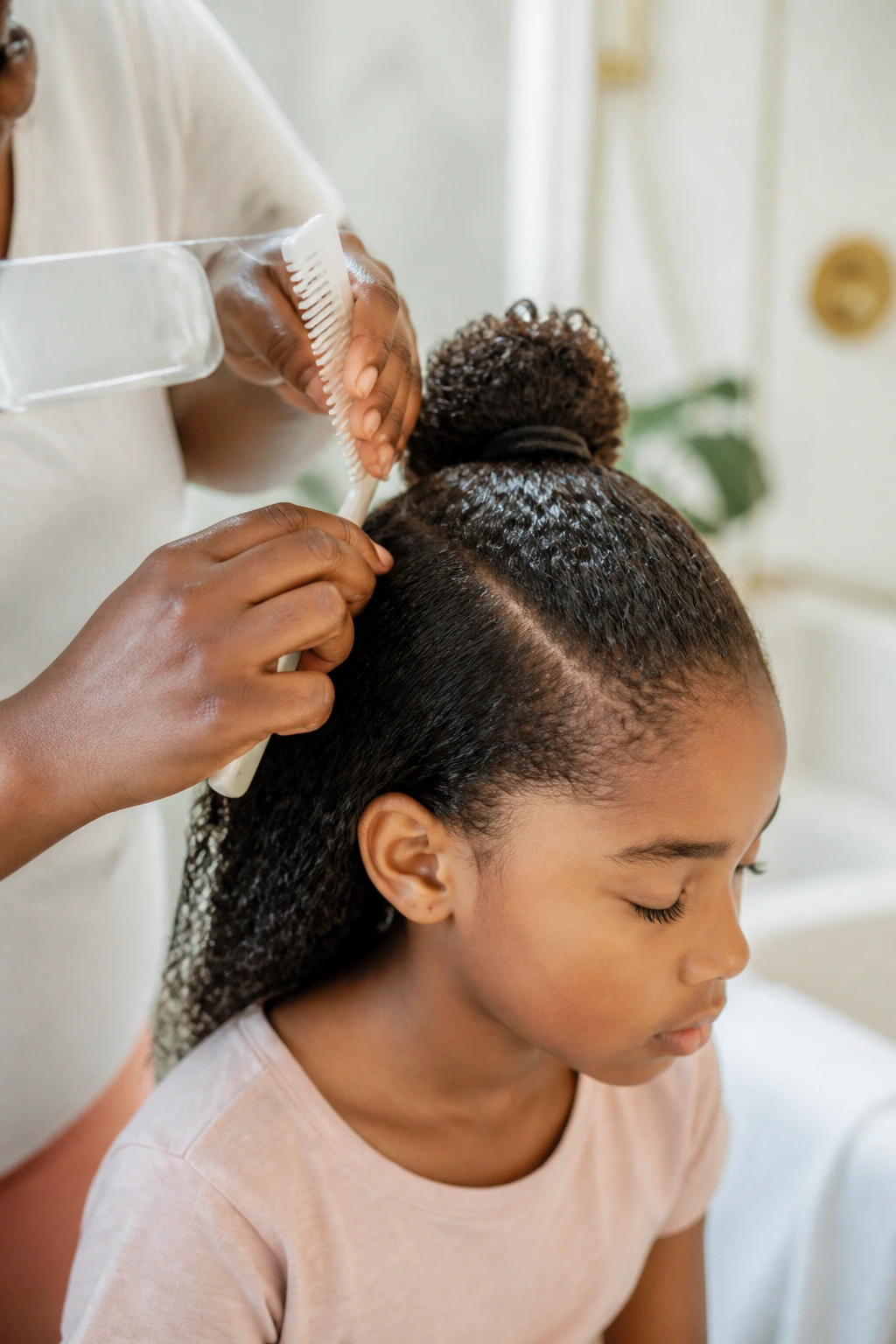
Hair prep changes the whole outcome. Straight hair usually behaves best when it’s dry or just slightly misted, because too much water can make it cling and then spring into weird bumps once it dries. A light spray is enough to calm static and help the brush glide.
Curly and coily hair usually prefers a damp start with leave-in conditioner worked through the ends first. That keeps the ponytail from turning into a frizz ball before it even leaves the house. Finger-detangle first if the knots are serious; brushing dry curls straight into a pony often makes the base puff out in the wrong places.
Thick hair needs sectioning. One hand holds the first half, the other smooths the second half, and then you bring them together. Trying to gather a dense head of hair all at once is how you end up with uneven bumps and a sore wrist.
Sensitive scalps need a gentler plan. Start loose, check the hairline, then tighten only as much as needed to keep the style from sliding. If the child winces when you pull, it is too tight. That’s the only test that matters.
Where These Ponytails Fit Best
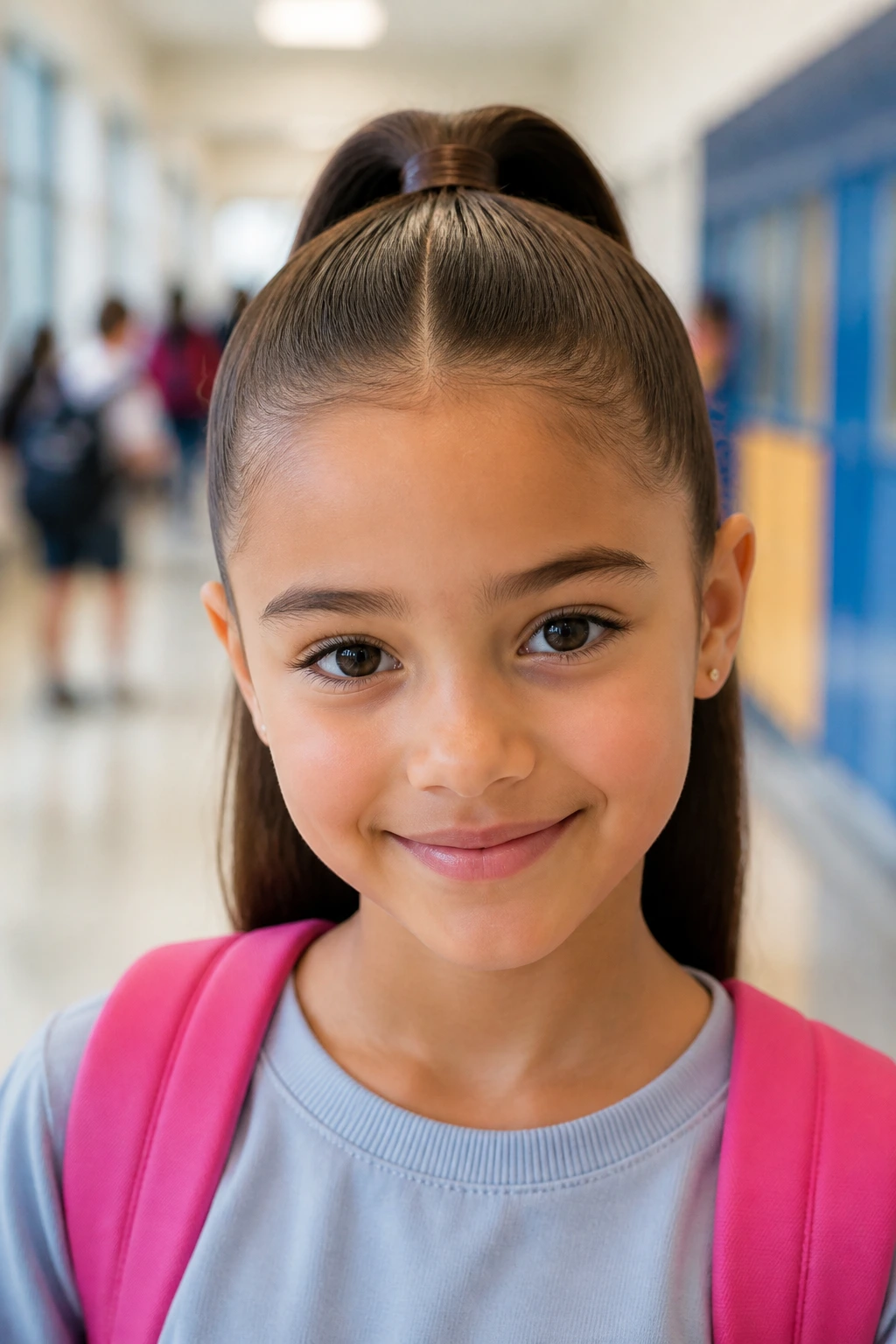
School Day: High cheery ponies, low nape ponies, and wrapped elastics are the easiest to keep tidy through reading time, lunch, and pickup. They look neat from the front and do not ask for much fuss once they’re in.
Practice Day: Dutch-braid ponies, sports double-elastic ponies, and sleek low ponies keep hair controlled when a helmet, a dance bun, or repeated movement would otherwise loosen everything. These are the styles that need to survive sweat and motion.
Photo Day: Wrapped elastic ponies, ribbon-tied ponies, and center-part high ponies give a clean line and a little polish without making the child feel overdone. The finish matters more than the complexity.
Weekend Play: Messy play ponies, side ponies, bubble ponies, and mini-clip styles feel relaxed but still look purposeful. They’re the ones I reach for when the day is full of swings, snacks, and sudden outfit changes.
Special Events: Bow-stack ponies, glitter-clip ponies, fishtail-base ponies, and criss-cross ponies carry a little more detail without crossing into fussy territory. A child can still move comfortably, which is the whole point.
Common Ponytail Mistakes and the Fast Fix for Each
-
Pulling too tight at the hairline: The pony looks neat for ten minutes, then the child starts touching the scalp or asking to take it down. Loosen the front, move the anchor point lower, and use a softer elastic.
-
Skipping the detangle step: The tail starts smooth and then turns frizzy, knotty, or uneven by lunch. Brush or comb from the ends upward before you tie anything in place.
-
Using one elastic for too much hair: Thick hair slips, drops, or feels heavy by midday. Split the section, stack two elastics, or switch to a style that spreads the weight.
-
Overloading with product: The roots look greasy and the pony loses grip. Use only a little smoothing cream or gel, and keep it near the front where flyaways live.
-
Ignoring the child’s part pattern: A cowlick or swirl at the crown can shove a center pony off to one side. Work with the natural growth pattern instead of trying to force a perfect line.
Easy Variations and Add-Ons for Different Hair Types
Ribbon School Day: Swap the usual elastic for a grosgrain ribbon tied over a low or mid pony. It holds shape better than satin and gives the style a clean, school-ready finish.
Curly-First Refresh: Leave curls mostly intact, smooth only the front with fingers, and gather the pony loosely so the curl pattern stays visible. This keeps the texture from puffing into a triangle.
Gym-Day Double Tie: Use one elastic to build the pony, then add a second one an inch lower for backup. It is a small move, but it keeps thick or slippery hair from drifting down the head.
Photo-Day Polish: Wrap the elastic with a strand of hair, smooth the front with a damp brush, and keep the part straight. It looks neat in a photo without needing heavy product.
Sleepover Soft Pony: Choose a low, loose pony with a satin scrunchie. It keeps hair from tangling while the child sleeps and doesn’t leave the scalp sore the next morning.
How to Keep Ponytails Fresh Overnight and Into Tomorrow
A ponytail can last beyond one day, but only if you treat the overnight part with some common sense. Tight high ponies are the ones most likely to leave a kink, a sore spot, or a swollen line at the crown by morning. If you know the style will carry into the next day, start lower and softer.
For bedtime, take out any bows or heavy clips and switch to a looser scrunchie if the child is sensitive. A satin pillowcase helps cut down on friction, especially for curls and coily hair. If the style needs more than one day, it’s usually smarter to loosen it at night and re-secure it in the morning than to keep tightening the same elastic over and over.
The refresh is fast. Smooth the top with a damp brush, fluff the tail, and replace any stretched elastics that have lost their grip. If the hair has product buildup at the front, wipe it lightly with a damp cloth or a tiny bit of conditioner on fingertips, then brush it back into place. The style doesn’t need to look brand-new. It just needs to look intentional.
One more thing: if the child wakes up with a red mark or tenderness, give that area a day off. Hair health matters more than making the same ponytail happen again.
Questions Parents Ask About Kids’ Ponytails
How tight should a child’s ponytail be?
Tight enough to stay up, loose enough that the scalp does not hurt when you press around the hairline. If the child touches it constantly or you can see a strong red mark after ten minutes, it’s too tight.
What elastic works best for fine hair that slips?
Soft snag-free elastics with a smaller diameter usually hold fine hair better than thick, bulky ones. If the pony keeps sliding, add a second elastic underneath or switch to a low style that fights gravity less.
Can you do ponytails on short hair?
Yes, though the pony may be tiny. Short layers often work better in mini ponies, half-up styles, or a low nape pony with clips holding the shorter pieces back.
What is the easiest ponytail style for curly or coily hair?
A curly puff pony or a low pony with a soft scrunchie is usually the least stressful. Those styles let the texture stay in place instead of forcing it into a smooth shape it does not want.
How do I keep a ponytail from bumping up at the crown?
Start with a clean part, brush the hair in the direction it naturally grows, and gather it with steady pressure instead of one hard pull. A little mist of water or leave-in spray on the top sections can help the surface lie flatter.
How do I make a ponytail look neat without using heat?
Use a soft brush, a small amount of smoothing cream, and a clean elastic. Wrapping the elastic with hair or ribbon also makes the style look more finished without changing the shape.
How often can kids wear ponytails without stressing the hairline?
Quite often, as long as the placement changes and the tension stays light. Repeating the same tight high pony every day is what causes problems, not ponytails themselves.
What should I do if the ponytail hurts after it’s tied?
Take it down. Seriously. Redo it lower, looser, or with a softer elastic, and give the scalp a rest if it already feels tender.
A Softer Kind of Ready
The smartest ponytail is not the one with the most parts, the most clips, or the most “wow” factor. It’s the one that fits the day and doesn’t cause trouble later. Some mornings call for a slick low pony. Other mornings need a bubble tail, a ribbon, or a quick half-up tie that keeps the front from falling in the eyes.
If there is one rule worth keeping, it is this: build for comfort first, then add the pretty detail. Kids notice discomfort long before anyone notices a perfectly aligned zigzag part. A style that survives school, a car seat, and one dramatic hoodie pull is doing its job.
The next time the morning gets loud, pick the ponytail that buys you calm instead of the one that looks hardest to do. That small win is worth taking.
